Showing posts with label historical novels. Show all posts

Saturday, 15 January 2022

QuickLit January 2022: Reading year review

 Linking up with Modern Mrs Darcy once more for QuickLit reviews. Time to look back on my reading year. Last January, I declared that my goal was actually to read fewer books, but more mindfully. I did end up down on the 2020 count, but not really for the intended reason. I just ran out of steam by October - Covid fatigue, I guess. I even stopped remembering to note down which books I'd read, but luckily they were almost all on Kindle, so I could figure it out. So, as far as I know, my stats are:

Total: 41 books (I was averaging a little over 50 the past few years)

Print books: 9

E-books: 31 (Due to Covd restrictions, I only had one trip to the UK to stock up on print English language books.)

Audiobooks: 1 (But it was the enormous Clan of the Cave Bear. I also listened to a lot of podcasts.)

Fiction: 36

Non-fiction: 5 (I prefer to read non-fiction in print form so that I can flip back and forth, so this one is obvious.)


Here are my favourites of 2021:

Taylor Jenkins Read - Daisy Jones and the Six

My parents grew up in the 60s, so our house was full of  sixties music, which is why I'm a Stones and Kinks fan. This book nailed the 60s/70s rock scene - it felt like I was reading a non-fiction memoir. An investigative journalist tracks down members of the iconic band Daisy Jones and the Six to find out why they split up at the height of their meteroic rise to fame. Absolutely read if you're a fan of this musical era!
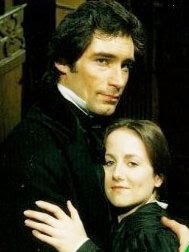

Timothy Dalton is THE Mr Rochester, and I'll take off my corset and fight anyone who disagrees ;)

Charlotte Bronte - Jane Eyre

I read through all of Charlotte Bronte's novels this year. It began with Jane Eyre - I always name it as my all-time favourite book, but I hadn't read it for a while, and I was afraid to find out if it had lost its charm. Reader, fear not. Fierce, independent Jane, who holds fast to her integrity whatever the world throws at her, is a timeless heroine. And I still get a deep thrill at the words, 'Reader, I married him.'

Kazuo Ishiguro - The Remains of the Day

I totally hated the ending of The Buried Giant, and there's no way I'm going to frighten myself with Ishiguro's dystopian novels, so it took me a while to try this one. In the 1950s, a butler takes a road trip to meet a former housekeeper, and reflects on his life of service to a high-minded but ultimately misguided lord. A beautifully written, bittersweet reflection on lost love and lost causes, but with a little hope at the end.
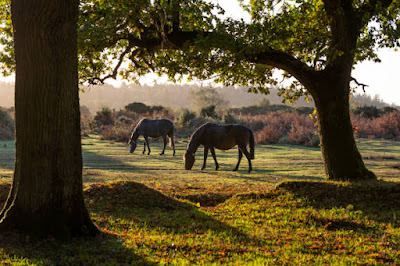

The iconic New Forest ponies

Edward Rutherford - The Forest

Rutherford seems to have carved out a niche penning huge tomes that cover centuries of history. I'd read the more well-known Sarum, but I think I enjoyed this even more. The novel tells the stories of the families (and trees and animals) who inhabited the New Forest over a thousand years of history (yes, in Britain, a forest gets to be called new when it's only a thousand years old). This, and Sarum, is really a series of interlinked novellas, so they're a good choice if you love historical fiction and/or want to tackle a large book for a reading challenge.

Molly Martin - The Art of Repair

I read this in May, but still keep turning to it. This slender volume is part clothing repair manual, part paean to the art of caring for our belongings. Her few methods are simple (well, OK, I don't feel up to tackling Swiss darning yet), but her love for mending is infectious. And slowly Sashiko stitching a patch on my son's trousers, when I could replace them for a few euros, feels like a subversive act of rebellion in our throwaway society.



Phillipa Langley and Michael Jones - The King's Grave

As a teenager, I was a devoted Ricardian, reading everything about Richard III I could get my hands on, fiction and non-fiction. I even wrote 'Richard III is innocent' on the front of my school history notebook! The King's Grave is Langley's account of the excavation of the Leiceistershire abbey that led to the discovery of Richard III's grave in 2012, interspersed with Jones's revisionist biography of this controversial king, England's last monarch to die in battle. I have a more moderate view of Richard now, though I'm still inclined to think he did not order the murder of the Princes in the Tower. And for 2022, I'm exicted to put Nicola Cormick's new novel The Last Daughter (US: The Last Daughter of York) on my reading list, a historical fantasy take on the fate of the younger prince.

I think 2022 is going to be a slower reading year, as my main goals are more Slovene classes (got to get fluent in the language since I live here) and finishing the sequel to my novel A Dorset Summer. But my six-year old is now into longer chapter books, so I'll have more interesting kiddie reading. We're currently up to The Voyage of the Dawn Treader in the Narnia series. How was your 2021? Do you have 2022 reading goals, or, like many of us, have you ditched your usual plans? If you have a review, I'd love to link to it!

A roundup of 2022 Quicklit reviews:

Katie @ The Cozy Burrow

Shannon @ Shannon Enjoys Life!

Elena @ A Beautiful Hope

Susan @ In the Storm

Monday, 15 November 2021

QuickLit November 2021

 Linking up with Modern Mrs Darcy as usual. October was not a big reading month for me. One reason was this (sorry for the bad photo - it's from Messenger):


We bought this puzzle, Breughel the Elder's Children's Games, in the Kunsthistoriches museum, Vienna, in August, and I decided that the advent of autumn was a good time to get it out. It took my husband and I about a week, during which we neglected many other things (like reading). I also learned that a mathematician (husband) has a very different attitude towards doing a puzzle than an arts scholar (me). To me, it was about enjoying the emerging picture, to him, solving the problem as soon as possible. And P.S., if you like doing puzzles, I really recommend a puzzle mat.


The original for a better look.

The second reason was I felt unsettled for most of the month. Maybe it was the approach of the season where we tend to cosy up indoors, but I found myself dipping into two home-oriented books on my shelf/Kindle. Marie Kondo's The Life Changing Magic of Tidying Up obviously sparks joy because I still have it on my bookshelf - honestly, I love it as a quirky memoir as well as inspiration for tidying. The other was The House Witch by Arin Murphy-Hiscock. It's new-agey, but I'm a little that way inclined myself, so I like contemplating the spiritual aspect of keeping the hearth, even if I no longer have a house with a physical hearth.


The final reason was my choice of audiobook: 

Jean Auer - Clan of the Cave Bear

I've never read this ground-breaking historical fiction from the 80s, but Chirp a dirt cheap deal, so I gave it a go. It took a little while to get into it, partly because the audio narrator did not seem especially suited to the book, and partly because the actual narrator is some sort of omniscient anthropologist, who gives all the technical and scientific details behind the story. But once I was into it, I was hooked. Usually, I have a reading book on the go at the same time, but I just couldn't think of anything that really complemented reading such a different book for me, so I stuck with this - over 22 hours of audio.

It tells the story of a Cro- Magnon girl, Ayla, rescued after an earthquake by a Neanderthal clan and adopted by their medicine woman and her shamen brother. Although loved by her adoptive family, she is always the outsider, her very DNA making her think and act differently than her new misogyistic tribe, and hated in particular by the clan leader's son. Through her we trace the final struggle taking place between these two branches of humankind. Interestingly, I've seen it described as a precursor to YA dystopias like The Hunger Games.

So there we go. Anyone else ever had the problem of not being able to pair a book and audio book? Are the others in the Clan of the Cave Bear series (Earth's Children) worth reading?

Friday, 15 October 2021

QuickLit October 2021

 Linking up with Modern Mrs Darcy as usual. For some reason, I got out of the habit of keeping up my list of books read. Not sure if it signals that I need to perk up my reading life, or just that I'm getting absent minded. Luckily, all my books are on my shelf or Kindle as I'm not living in an English-speaking country, so here's a round-up from last month.


Jennifer Robson - The Gown

This had been on my list of 'I'd read it if it came on sale' books - and my patience was rewarded. It's a three-way story, of two young women, Londoner Ann and Holocaust survivor Miriam who are embroidering the gown for Princess Elizabeth's wedding, and Ann's grandaughter, Heather, who is solving a mystery that Ann left behind.  Although the plot was built on what, to me, was a bit of a flaw (that Ann's daughter never tried to find out anything about her father), I enjoyed the story, particularly the re-creation of postwar Britain. The modern day story, I felt so-so about. The trope of 'person finds photo/jewellery/diary and uncovers mystery' seems a bit ubiquitous nowadays.


Barbara Pym - Crampton Hodnet

Barbara Pym never disappoints with her comedies of manners. This is an early novel, but it was set aside when Pym became involved in war work, and left unedited until after her death, as she felt it was dated. Now, of course, it is a perfect period piece, set in Oxford in the 1930s. Elderly Miss Doggett likes to think she has her finger on the moral pulse of Oxford. She is eager to promote the romance between her great-neice, Anthea and a well-connected young man - and to quash the budding affair between Anthea's father and a young student. But the one liason she does not see is going on right under her nose, between her companion Miss Morrow and lodger, the curate Mr Latimer. 


Barbara Pym - brilliant writer, and cat lady

Trisha Ashley - The Garden of Forgotten Wishes and The Little Teashop of Lost and Found

In a spate of mental exhaustion, I put my feet up with two light rom-coms. In The Garden of Forgotten Wishes, Marnie returns to the UK after several years in France hiding from her coercive ex-husband. She takes a gardening job in the little Lancashire village her mother had fled years ago, but decides not to reveal her identity. One of her employers turns out to be a former fellow student who has his own reasons to be hiding. After a thorny start, if you will forgive the pun, relationships, of course, are restored along with the garden. I liked this best of the two, savouring its quiet pace.

In The Little Teashop of Lost and Found, Alice is reeling from the death of her fiance. She decides to sink her inheritance and grief into the project of reviving a little teashop in Haworth, near where she was found abandoned as a baby. As she seeks to work through her loss and uncover answers about her life, she also finds herself attracted to her antiques dealer neighbour, who will inadvertantly lead her to the truth.

I've got books lined up until the end of the year, I think, so I've put a cap on Kindle purchases - unless of course, another TBR bargain pops up...

Thursday, 15 July 2021

QuickLit July 2020

 Linking up with Modern Mrs Darcy as usual. In retrospect, it is quite clear why I ended this past month with no palpable desire about what to read next - I must have drained all my emotional reading resources with these two titles.

Credit: http://www.impawards.com/1993/remains_of_the_day.html

Kazuo Ishiguro - The Remains of the Day

I gave Ishiguro another go, even though I hated the ending of The Buried Giant. In this Booker Prize novel set in the 1950s, an aging butler takes a road trip to visit a former housekeeper, and along the way, reminisces about a lifetime devoted to the service of Lord Darlington. Beautiful, restrained prose makes this story of lost causes and lost love all the more bittersweet. And, thank goodness, a glimmer of positivity at the end. I've never seen the film adaptation, but reading this, I can imagine that Emma Thompson was perfect as the housekeeper.


Charlotte Brontë - Villette

Most of the month was taken up with re-reading Villette. I'd only read it once, decades ago, and pretty much just recalled the end. Wow. Its effect crept up on me gradually, but by the end I wanted to throw around clichés such as tour de force and masterpiece of psychological drama. Cast on her own devices, Lucy Snowe follows a whim and travels to Villette (a fictional Belgian town), where she finds work as a nanny and then English teacher at Madame Beck's school. Lucy occupies the invisible position of a working middle class woman. 'I am a cypher,' she says, and the tension in the story comes from the way she is labelled by others (passive, uncontroversial) and the passionate, opinionated person she is within. She is so used to hiding, that she even conceals facts from the readers at times, sometimes drawing us in, sometimes pushing us away. I was pretty exhausted by the time I finished it. Jane Eyre will always have my heart, but Villette has my respect.

And has anyone else read and re-read that penultimate paragraph, trying to will yourself into discovering a different ending?

I'll pad out this post with a favourite I bought for my son recently:


Linda Skeer - Dinosaur Lady: The Daring Discoveries of Mary Anning, the First Paleontologist

I spent much of my childhood on the Jurassic coast, so I've been fascinated by Mary Anning for decades. This is a colourful introduction to the fossil-hunting Dorset girl who relied on her own skills, studies and deductions to discover new species, and is arguably one of the founders of paleontology, even though, as a lower-class woman, she was often slighted by the men who came to rely on her expertise.

Looking forward to reading your reviews! Have you read a book that just exhausted you? Any recommendations to bounce back?


Monday, 14 June 2021

QuickLit June 2021

 Linking up with Modern Mrs Darcy as usual for quick reviews. Someone seems to have flipped the switch from spring to summer here on the Slovenian coast. Sun cream (sunscreen to US readers - don't ask why the British still use an old-fashioned word!), sea bathing and gelato is the order of the day, plus hiding indoors to read when it's too hot. Here's my reading from last month:


Taylor Jenkins Reid - Daisy Jones and the Six

This is going to be one of my best reads of the year. I love rock music and the whole rock scene from the late 60s/early 70s, and Reid brought it to life so vividly for me, I felt I was reading nonfiction. Told in interview-style as an investigative journalism piece, it explores how Daisy Jones and the group The Six got together, rocketed to fame - and broke up just as they reached stardom. Part of the hook is figuring out whose version you are going to believe, and to what extent. I've been recommending it to anyone I know who shares my love of that music genre.


Ruth Saberton - The Locket

A dual timeline story that revisits characters from The Letter (review here), which I really enjoyed. I thought this was okay, nothing amazing, perhaps because it is very similar to the first.  Looking for something to occupy her mind while her son serves in Afghanistan, Alison finally begins sorting through her mother's belongings, and brings to light a hidden WWI love story between her upper class great grandmother and a photographer.


One of Martin's whimsical illustrations for The Art of Repair

Molly Martin - The Art of Repair

The title is a play on words - this is a little book both about how to repair clothes, and a paean to it as an act of love, peppered with stories of rescuing beloved clothes (or toys). I devoured it in an evening, but am still returning to it over and over again. If you are looking for a comprehensive manual, you'll be disappointed, as Martin uses a very simple approach with just 6 basic stitches, but if you want something more philosophical and whimsical, you might check it out.


Charlotte Bronte - The Professor

This was unpublished in Charlotte's lifetime, and she largely rewrote this early novel into Villette. She made a wise choice - this first novel quite clearly works out the homesickness and cultural shock she (and Emily) endured during their years abroad as teachers/pupils more than it is crafted as a great novel. Rejecting, and rejected by, his family, William Crimsworth takes a position as a professor in Brussels, where his English Protestant sensibilities suffer amid Catholic culture, until he meets the (Protestant) woman who proves a fit companion. Honestly, it was hard to sympathise with someone who, from a modern viewpoint, is a misogynist and bigot. But now I only have Villette to go and I have (re)read all of Charlotte's novels this year.


Maggi Andersen - Never Dance with a Marquess

This is the latest in Maggi's 'Never' romance series. Nicholas is determined to abide by the wishes of his late mentor and friend, Max, to become the guardian of his two younger children, and see the elder daughter, Carrie, safely through her London Season and into the arms of a suitable husband. But Carrie does not care for the marriage mart when she has discovered the right man under her nose. Can she break through the defenses Nicholas has erected after a youthful tragedy, and, together, can they protect her siblings from Max's ruthless brother? Maggi (a member of my critique group) has perfected the art of the romantic novella, so if you want a perfectly-sized romantic treat, I recommend this and any of her Regency books. Maggi also kindly reviewed my novel on her blog recently.

I'm hoping that I won't be around for next month because PM Boris will finally have let me get into the UK without quarantine. We shall see...

Thursday, 10 June 2021

A Dorset Summer reviewed by author Maggi Coleman!

 US Today best-selling author Maggi Andersen has kindly featured A Dorset Summer on her blog. Maggi, a member of my critique group, has forged a very successful 'second career' as a novelist after raising her family. I so admire the focus that brought her plan into fruition! I also love her books, though romance is not the genre I usually turn to, because her characters are immediately engaging, and the plots usually feature a mystery/suspense element.

You can check out the review on her blog, or visit her website for information on Maggi's own books. Happy reading!

Maggi Andersen's newest Regency novella


Thursday, 15 April 2021

QuickLit April 2021

 Linking up with Modern Mrs Darcy as usual for quick book reviews. I said I wanted to read more mindfully this year, and I achieved that in March, with a classic that needed close reading, and a long book - then I skimmed something meh while in the throes of a bad cold.

Charlotte Brontë - Jane Eyre

I always cite this as my favourite book - but I haven't re-read it in years. It got to the point where I was afraid to, in case it had lost its charm. So, I took the plunge and reader, I was not disappointed. I may see it differently in mid-life than when I first read it as a teenager, but the fierce, loyal, passionate Jane, who places her integrity above all else, will always be my ideal heroine. I wrote a longer piece about re-reading it here.


THE Mr Rochester - Timothy Dalton in the BBC series

Sarah Shoemaker - Mr Rochester

Jane Eyre prompted me to another re-read. I always think of this as my gateway Modern Mrs Darcy book, as it was the first recommendation I tried from the website. I really enjoyed it the first time I read it, but following straight on from the original did not make as favourable a comparison. It's Dickensian rather than Brontëan in tone, and the parts that don't intersect with the original pulled me in to Rochester's story. However, while I understand Shoemaker's dilemma in dealing with the 'Jane' part of the story, the decision to summarise most of it in reported speech means that we lose the spark of their duelling conversation.

I'll skip the meh book for a review of the latest chapter book I read with my five (almost six) year-old.


Eva Ibbotson - Not Just a Witch

Back when there was more of an outcry over Harry Potter, I'd often see US bloggers assert, "There's been nothing like this before!", when in fact, from a British point of view, Harry Potter comes from a long lineage of children's fantasy/school stories. In my opinion, the Austro-British Ibbotson is one of the finest authors in this tradition. Her books are imaginative, smart, entertaining, and down-to-earth. Heckie is an animal witch, that is, she can turn people into animals - but she is also a good witch. Following a misunderstanding with her best friend Dora, a stone witch, Heckie moves to Wellbridge, intending to Do Good by transforming wicked people. She recruits local witches and three children, particularly the lonely Daniel, ignored by his professor parents. But a local furrier, Mr Knacksap, finds out about Heckie's power and hatches a plot to deceive her into making him a fortune. 

This book is probably more aimed at middle graders for independent reading. My son loved it and made me read it twice over, though I did gloss over a few comments about human cruelty that I was not sure I wanted him to think about yet. (FYI, my all-time Ibbotson favourite is Which Witch?)

Any books you have shied away from re-reading? Wishing all reviving Spring or Autumn reads this next month!


Monday, 15 March 2021

QuickLit March 2021

 Linking up with Modern Mrs Darcy as usual. Strange to recall that about a year ago, I was feverishly reading Anne's new book, Don't Overthink It. My son and I were set to fly to the UK to visit family in two days' time, and there now seemed every possibility that once there, we might be stuck. The advice in the book helped me think through plans that gave me the confidence to go ahead and enjoy my visit without being overwhelmed by anxiety. 

It may seem small in the scheme of things, but many readers will be looking back over a year of rather different reading lists or reading habits. Dark or emotionally harrowing books have been (mostly) off my list. On the other hand, finally purchasing a new e-reader after a few years of reading on a large phone screen (for frugality and practicality) refreshed my reading experience. I'm just sorry that I didn't fork out the extra money for a waterproof one now that we have a bathtub.

Oh yes, actual books: I tackled a couple of books for research this month, so my leisure reading list is smaller. Here goes...


Daphne Du Maurier - Myself When Young

Breezier in tone than I expected, but it soon drew me in. Du Maurier draws on the journals she kept from an early age to trace her life and development as a writer up to the point of her marriage. It's frank, and, be warned, includes an exploration of the emotional incest that infuses her later novel, The Parasites. MMD readers will be delighted to know she also shares the reading lists she kept from those years!


Alan Bradley - The Sweetness at the Bottom of the Pie

I'd read one of these Flavia de Luce mystery novels out of turn and, though I didn't really take to it, decided I would give another one a go. This is the first in the series, set around 1950 in Britain: eleven year-old Flavia finds a dying man in the grounds of her family's mansion - a man whom she had heard arguing with her father the night before. Blackmail, poison and a decades-old crime: just the excitement to feed the brain of a precocious, chemistry-obsessed girl. On paper, Flavia is a character I ought to relate to: intelligent, socially awkward, probably on the Asperger's spectrum,  but I just can't empathise with her. I think one of the problems is that, in both books I have read, the American author uses a British phrase or allusion in a way I would not, which throws the world of the novel off-kilter for me. Sorry, Flavia fans, but please, convince me to read on if you can :)


Corfe Castle, 1950s. Credit: https://www.dorsetecho.co.uk/news/features/lookingback/18850300.pictures-dorset-1940s-1950s/

Eric Benfield - Dorset

I'm ending with this, not particularly as a review, but as a little paean to vintage guide books. In researching Dorset in the first half of the twentieth century, my eyes have been opened to the charms of second hand books I would normally have passed over as pointless: old regional and travel books. I thought I'd be ploughing through outdated material, but ended up hooked - it's like time travelling from the comfort of your armchair. If you really want to get to the heart of a place, I recommend ditching the modern history and scouring the local second hand book shop for outdated guide books, written by a native son or daughter of the area. It's the first section I'll be heading for on my next trip.

Wishing you compassion and hope this anniversary, and books that will carry you through.


Monday, 15 February 2021

QuickLit February 2021

 Linking up with Modern Mrs Darcy as usual for quick book reviews. 

Well, having declared that my 2021 goal was to read fewer books, more mindfully, I clocked up a record seven for January. In my defense, one was begun in December, and one was a beta novel that I read during working hours (I loved it, I wish I could reveal all!). Here's the five that count as January's leisure reading:

Barbara Pym - No Fond Return of Love

I deliberately saved this to get the new year off to a happy reading start, because I am addicted to Pym's mid-twentieth century comedies of manners. Jilted Dulcie throws herself into matchmaking between her new friend, Viola, and the self-centred academic Aylwin, who is also arrogant enough to think he can enchant Dulcie's young niece. Amid the comedy of genteel stalking and the foibles of academia is a wry look at the attitudes emerging career women faced in the 1950s (and some fun internal references to Pym's other novels).


Charlotte and Mr Collins. Credit: https://thelongvictorian.com/2016/04/09/the-11-worst-couples-in-literature/

Molly Greely - The Clergyman's Wife

I'm not big on literary spinoffs, but I was intrigued by the idea of imagining how the Pride and Prejudice marriage of Charlotte and Mr Collins panned out. Charlotte has accepted the marriage of convenience that so disappointed her friend Elizabeth - until she meets a man who seems to be her soulmate. A sensitive, lyrical contemplation of the choices Regency women faced made this an unexpected companion novel to No Fond Return of Love.


Joan Lindsay - Picnic at Hanging Rock

Vaguely remembering the disturbing tone of the film version of this book from many years ago, I gave myself prior permission to put it down anytime it began to scare me - but I managed to get through it. On Valentine's day 1900, a group of schoolgirls and their teachers visit Hanging Rock in Victoria, Australia. Several of them vanish, never to return, and the story traces the ripple effect through the community. Hovering in the background is the sense of an ancient, aboriginal force that the 'civilised' British community is unable to suppress. Note: if you must have resolution, you will not like this novel.


The 1975 film. Credit: https://benefitsofaclassicaleducation.wordpress.com/2017/10/31/shocktober-review-picnic-at-hanging-rock-1975/

Dorothy L. Sayers - Murder Must Advertise and Have His Carcass

Two Lord Peter Wimsey mysteries in a row! In the first, Lord Peter goes undercover at an advertising agency to investigate the suspicious falling death of an employee. Sayers herself worked in advertising at one point, so a bonus is the insider's-view satire of the industry, that still has surprising resonance today.

Have His Carcass is the second Harriet Vane mystery. On a walking holiday, Harriet discovers a corpse on the beach with his throat cut. Is it suicide, as the police assume, the work of Bolsheviks, as his much-older fiancée insists, or something else altogether? I had already seen the TV version of this novel, but it still had me hooked.

The cold weather seems to be gripping both sides of the Atlantic, so I hope you are cosying up with some good books this month!

A P.S. After embarking on the fourth back-to-back reading of Bunnicula to my five year-old, I hopped on line and ordered the complete series. I hope this will keep him satiated for a bit.


Monday, 23 November 2020

St Aldhelm's Chapel: A Clifftop Mystery

Photo credit: https://www.dorsets.co.uk/photos/st-aldhelms-head-chapel.htm

A pirate or devil, I suppose they are much the same, and a saint guard the coast between them. Tonight the saint wins. The snow has hardened treacherously, and no one will be near Old Harry Rocks until the thaw. But the hardy and faithful among us have squeezed into Saint Aldhelm's chapel for the Christmas Eve service...

Credit: http://www.warehamartclub.org.uk/gallery-2/robert-mcleish/st-aldhelms-chapel-winter

I have already written about the legends of Old Harry Rocks, but another iconic landmark that is a supernatural anchor in my novel, A Dorset Summer, is St Aldhelm's Chapel, nestled up on the clifftops at Saint Aldhelm's Head. It is also known as St Alban's chapel/St Alban's head, the Devil's Chapel, and as a Wishing Chapel.

There is considerable mystery surrounding the chapel - and this post is indebted to The Dorset Rambler (see link below) for pulling together the information I remember, but in a more cohesive manner! First, it is set on a circular earthwork, an ancient construction used at least as far back as the iron age (the impressive Maiden Castle earthworks is also in this part of the country - and I can attest that's worth a visit as well). It's Norman in construction, though some say the entranceway is Saxon. Secondly it is not built in a traditional church format: it is not in an east-west orientation, has no obvious place for an altar, and has a huge pillar in the middle of its tiny, square interior, not ideal for a congregation.

Photo credit: By Huligan0 - Own work, CC BY-SA 3.0, https://commons.wikimedia.org/w/index.php?curid=11929961


As to its names: Saint Aldhelm was a 7th century monk who became Abbot of Malmesbury Abbey and then the first bishop of Sherbourne. Aldhelm was a scholar and, apparently, a pretty good entertainer. He is known most famously for a set of riddles he sent to the King of Northumbria. Perhaps this is why he was also roped in to help with the biggest riddle in 7th century Britain - the controversy between the Celtic and Roman church over whose practice should reign supreme in this isle. (Historian that I am, I still feel upset about the Synod of Whitby.)

I'm guessing that the St. Alban appellation is either a common mis-repetition of the lesser-known name Aldhelm, or that the promontory and chapel were renamed for a more local saint. (Saint Alban is considered to be Britain's first Christian martyr.)

But back to the chapel that was (probably!) named after Aldhelm. Nothing is really known of its function as a religious building in its early centuries, apart from records of a priest here in the 13th century. Some surmise that it was actually built as a chantry, a small religious building where a priest was paid to pray for the souls of the dead (heavenly insurance for the wealthy). The religious connections are strengthened by the discovery in the 1950s of a thirteenth-century grave of a middle-aged woman found on the site, leading to speculation she was an anchoress. An anchorite is a person who chooses to give their life completely to contemplation and prayer, shut up in a tiny cell until death. Except, they became holy celebrities and people constantly sought them out for advice, so there wasn't always a bunch of time for meditation. Perhaps that is why this anchoress chose a remote home! Evidence of a smaller building nearby lends credence to the anchoress story. Since I am also very interested in Britain's most famous anchoress, Julian of Norwich, I like that theory. (I think maybe there's a novel in that!).

Photo credit: By Huligan0 - Own work, CC BY-SA 3.0, https://commons.wikimedia.org/w/index.php?curid=11929982

If not a chapel, some have suggested that it was a type of lookout - for the navigation of ships at sea (there's a mention of it as a sea mark) or to protect Corfe Castle further inland (it shares some similarities in construction with Corfe Castle). This idea is supported by evidence that a beacon may have sat on the roof where there is now a cross. Yet it has only one, tiny window.

I suspect it was all these and more, an ancient multi-purpose building: chantry, chapel and lookout!

As for its other names, I have not found any speculation for the name Devil's Chapel - maybe that is in keeping with the tradition of naming remote or odd formations after Old Nick (see my blog on Old Harry Rock). Or perhaps that's because it's a devil of a job to get to it! But it was definitely regarded as some sort of wishing chapel, because there is a hole in the central pillar where girls have dropped votive items such as hairpins, presumably after praying for a husband. By the way, you can also read centuries-old graffiti on the pillar.

A windswept visit from many years ago - my younger daughter is 17 now!

The chapel was part of the Encombe estate for centuries, until they handed it over to the Worth Matravers parish council in the 1960s. Even if we are not sure about how it was originally used as a religious building, in more recent history (19th century) it was restored as a chapel for the families of the coastguards who had cottages nearby. When they moved, the chapel was abandoned again. As far as I know there are still services held in the chapel - I recall summer morning prayer being advertised a few years back, but in these days of Covid-19, there are none listed. Here's the parish website, I'll try to update this when things change. It's on my Dorset to-do list to attend one someday: an early summer walk to the chapel for morning prayer, followed by a slap-up breakfast nearby (maybe at Durlston). (Hint to Mum and Dad -  I know you are reading this!!)

There's a quick route and a more challenging route to get to the chapel. If you have limited time or mobility (or small children in tow, which is both), you can drive to a small car park at Renscombe Farm, from where it is a short walk.

The longer way could be undertaken as a mini-pilgrimage, by picking up the South West Coast Path in the area. If you begin near Chapman's Pool, you can include a penitential thigh workout in the climb down (184 steps) and up (219 steps) to the chapel. I admit it's been a long time since I have taken that route.

Well, that was a long post  - and I didn't even exhaust all the stories. There are more than would fit into the tiny chapel! Take a visit, drink in the atmosphere, and decide for yourself.

The excellent Dorset Rambler article on the chapel: https://thedorsetrambler.com/2017/06/06/st-aldhelms-chapel-or-is-it/

Here's a circular walk along the South West coastal path, taking in other landmarks such as Chapman's Pool - it starts near the chapel for the short walk I mentioned above. https://www.southwestcoastpath.org.uk/walksdb/580/

Here's another, longer one beginning at Worth Matravers. They suggest refreshments at the Worth Matravers tea room. Don't start with tea there - trust me, you might not get any further! https://www.dorsetlife.co.uk/2015/06/the-dorset-walk-st-aldhelms-head-and-winspit/

If you got all the way down here and don't feel like scrolling up again, here is the link to the legends of Old Harry rocks.

Finally, of course, here's an extract from my novel, when Phoebe is taken to the chapel by James, whose attentions she is gently trying to dissuade.

A DORSET SUMMER: from Chapter 17


Ahead of us, Saint Aldhelm’s chapel beckoned, a small, square stone building close to the cliff, topped with a tiny steeple crowned with a cross. The chapel sank slightly below the surrounding ground, as if weighed down by the years. A single path wound west from the low wooden door. We tramped across the scrubby grass to join it.
‘Is it a real chapel, or a wayfarer’s place?’ I asked.
James looked over his shoulder. ‘Probably a chapel. Some believe it is built on an ancient Christian site. Others say it is a secret lookout because it isn’t situated in the standard orientation for a church.’
‘A lookout for smugglers?’
‘For sailors. The coast is treacherous here. Mind you, I would not be surprised if the chapel played its part in smuggling operations.’
Given what he had told me about his family’s involvement with contraband, I wondered if he was being disingenuous. I could imagine him and the Major creeping up here in the dark to meet men whose names they pretended not to know, scurrying back under cover of the barley with their cigars and brandy.
James pulled the door open, scraping the paving. Inside, a faint musty smell pervaded the small, dim space. A few tiny pews faced the altar table, lit only by an equally tiny recessed window, more like a hermitage than a chapel. The roof was supported by a crumbling stone pillar. A vase of blown roses balanced on a stand by the front pew, the only indication that anyone had a thought for the place.
I took a closer look at the pillar, taken aback to find it desecrated with the names of bygone walkers or worshippers, but intrigued to note dates going back several centuries.
‘Do people still worship here?’ I asked. Talking with James was so easy when the conversation was not about us.
‘I believe a priest holds a service once a month for the coastguard families, and we celebrate a community Christmas Eve service out here, providing the weather allows. The chapel belongs to the Encombe estate.’
Though physically empty, the atmosphere of the chapel enveloped me, kindly, patient, long suffering, as though it had seen more joy and tragedy than its small walls could contain. Perhaps that was only my mood. I turned towards the door. ‘I have seen enough now, may we leave?’
We traipsed out, but instead of returning to the car, James led the way around the chapel and along the narrow path to the cliff’s edge. He was prolonging the outing, I knew, waiting for the right moment to say something, or for a sign from me.
I’m sorry, I said silently to his back. If I had not been a coward, I would have run forward and taken his strong, brown farmer’s hands in mine, and told him: You are sweet and kind and honourable, everything a girl should want. You don’t deserve to be anyone’s consolation prize, and I won’t let you be mine.
We stopped a foot from the edge. The cliff face dropped sheer for maybe a third of the way down before sprawling in a crumbling, heaped mass of white rocks to the sea.
I leaned forward and watched the waves pound the rocks at the base of the cliff, reminded once more of James’s story and the doomed lovers he had cast into the sea at Old Harry Rocks with adolescent indifference. I closed my eyes against the sting of the wind, letting the gusts buffet me. My hearing muffled by the competing roar of wind and waves, I saw in my mind’s eye Philippa and Roger, hands clasped, about to leap. Surely the chapel knew their story. Across the millennia, it must have witnessed its share of desperate and broken-hearted people poised on this cliff’s edge. Did they take one last glance behind them at the steadfast stone walls, murmur one last prayer for forgiveness, or did they turn their backs on hope to meet the cold arms of the sea?
James snatched me back from the cliff’s edge. ‘Steady, Phoebe.’ At the fear in his voice, I opened my eyes, realizing only now that I had been swaying back and forth with the wind. A dislodged pebble clattered down the cliff face.
‘Sorry,’ I said, attempting to sound light. ‘My imagination was wandering. I was thinking of your story, of the cliff top climax.’
‘I didn’t know it was that affecting. First my cousins, now you. I don’t think I dare tell it a third time.’ He tried to echo my levity, but the way he brushed my arms as he let go of my cardigan told me I had scared him.

Sunday, 15 November 2020

Quick Lit November 2020

 Linking up with Modern Mrs Darcy as usual for QuickLit. On reflection, it was a mixed bag for last month's reading - one classic, one so-so, and ending with some escapism as we went into a second lockdown. But here are the quick reviews:


P.G. Wodehouse - Pigs have Wings [audiobook]

How did I, with multiple degrees in English literature, escape reading P.G. Wodehouse this far in life? To be honest, because I harbour a suspicion of novels that are deliberately trying to be funny, and rarely try one. How wrong I was. With the impeccable upper class accent of the narrator, Jeremy Sinden, I was giggling from the beginning. Pig napping and star-crossed lovers are all adroitly managed by Lord Emsworth's incorrigible brother, Galahad. I have another Blandings Castle novel already in my TBR pile.


Donna Fletcher Crow -  Glastonbury: A Novel of Christian England

I wavered over whether to post a review of this because in some ways I don't feel qualified. To cut to the chase, it turned out that this novel is from Crow's pre-Anglican days, when she wrote for the Evangelical Christian fiction market - not my cup of tea at all. It was inspired by Edward Rutherford's Sarum: The Novel of England, an equally fat novel (actually, series of linked novellas),which I loved. As it says, Glastonbury tells the story of English Christianity from the time of Christ (following the legend that Joseph of Arimathea came to England with the Grail) to the dissolution of the monasteries in the reign of Henry VIII. I liked the overall premise and the basis for each novella, and so I persevered through 1000-plus pages because I had been promising myself I would read this when I got a new Kindle, and also because the parts that I enjoyed, I really enjoyed. However, I confess to skipping chunks of the evangelical stuff.


Nancy Warren - The Vampire Knitting Club Books 1-3

I was seduced by Bookbub again into buying this collection on the cheap, to re-read the first and devour the others for a Halloween treat. Well-written escapism. American-raised Lucy has inherited her grandmother's Oxford knitting shop, although she can't knit to save her life. But it is soon apparent that her grandmother not only didn't die of natural causes, but is not technically dead. Oh, and she happened to be a witch who hosts a knitting club for her vampire friends, who are happy to break the boredom of eternal life by helping Lucy solve the murders and mysteries that fall her way as she herself takes up the family witches mantle.

Hope books are keeping you sane in these strange times! Going out on the BBC adaptation of the Blandings novels.


Thursday, 15 October 2020

QuickLit October 2020

 Back to linking up with Modern Mrs Darcy for QuickLit after a September trip to see family in Dorset, England (and play in the sand and eat lots of cake). Plus, the local bookshop owner agreed to stock my novel set in Dorset!

Local fame for A Dorset Summer :)

Fun family fact - the Seaweeds book next to it was published under a project my brother was involved in! Here's a few reading highlights from the last couple of months:

Daphne Du Maurier - Mary Anne

This is another of Du Maurier's fictionalized family biographies, this time of her notorious great-great grandmother, Mary Anne Clarke, who pulled herself out of poverty to become a courtesan, and was for a short time the mistress of the Prince of Wales - until she reached too far. Du Maurier does not paint a pretty world or likeable characters, but this is the eighteenth century where reputation, money and a woman's body are commodities in the game of politics. Not as riveting as her fiction, but interesting if you are already a Du Maurier fan and want to know more about her family.

Jane Borodale - The Book of Fires

Keeping to the eighteenth century for this literary historical novel, shortlisted for the Orange prize. Agnes is seventeen and pregnant out of wedlock. When an unexpected way out presents itself, she flees to London and ends up as the apprentice to a fireworks maker, from whom she hides her shame. But her salvation has a time limit, and her all choices are desperate. Lyrical, lots of fascinating details about pyrotechnics, and a surprise happy ending.

My book stash from the UK, with the new Kindle I bought there on top

Jenny Colgan - The Endless Beach

My Mum gave me The Book of Fires to read, and I left her this when I was done (because my bags couldn't take one. more. thing). A sequel to The Summer Seaside Kitchen (or The Cafe by the Sea if you are in the US). Flora wonders if her new relationship with Joel is actually getting anywhere. Lorna, her friend and headmistress of the tiny island school, is wrestling with her love for refugee doctor Saif, whose wife and sons are missing. Only Flora's brother seems to enjoy unalloyed happiness with Colton - but their new love is about to be tested to the full. Typical delicious Colgan fare that will keep you turning the pages.


Plenty of new publications from my critique group this past month or so. Here' s a sampling:

Ursula Thompson - Brothers of the Sun. Book 1: All at Sea.   Piratical debut.

Katherine Pym - Begotten. Fantasy based on the ancient Sumer civilisation.

Maggi Andersen - Introducing Miss Joanna. Second in her romance novella series Once a Wallflower. Plus The Heir's Proposal. Maggi is prolific :) Oh, and a romance novella collection she contributed to, The Midnight Hour: All Hallows Brides, won the RONE award!

Anne Marie Brear - Market Stall Girl. Historical family saga set in Yorkshire.

Hope you are having a safe and happy October. I confess this is the time of year when I am grateful I have moved back to Europe and only have to think about Christmas :)

Thursday, 16 July 2020

Legends of Old Harry Rock

Photo credit: https://www.pxfuel.com/en/free-photo-jlyjo

Old Harry Rock (or, Old Harry Rocks) near Studland is/are an iconic landmark in Dorset, although perhaps a little less famous (if postcards are anything to go by) than Durdle Door in Lulworth. The chalk outcrop looms as a geographic phantom throughout my novel, A Dorset Summer.

Just as people don't agree on exactly how to name them (just counting the main rock, or those surrounding him), how they got their name is also in dispute. Some say they are named after the fourteenth-century Poole pirate, Harry Paye. Explanations include that his ships hid near here as a launch point for his raid on merchant ships, or that his treasure was stashed in the cliff's caves. History suggests that Harry ferried pilgrims across the sea to Spain, and, in an admirable display of business acumen, filled his empty holds on the return journey by indulging in piracy along the Spanish coastline, as well as accepting money from Spanish nobility to aid them in their feuds.

The main reason he is celebrated comes a little later - and I've seen slightly different versions of that story. Either in payback for the piratical antics of the man they called Arripaye, or in a run-of-the-mill act of aggression,  A Spanish-French alliance raided the coastline along Dorset, launching an attack on Harry's home town. The people of Poole beat the invaders off in a desperate fight, even ripping doors from their hinges to use as shields. Apparently Harry was absent, but in revenge, he gathered a small fleet and captured 120 French ships, giving their cargo to Poole. It is said the people were drunk for a month afterwards on the claret. I'm surprised they even remembered his name after that, but they (maybe) named the rocks for him, and commemorate him on Harry Paye Day - Pirate Day - in Poole.

Photo credit: https://www.pxfuel.com/en/free-photo-ozuwh

The other most popular legend links the rocks to "Old Harry", the devil, joining with many other geographic oddities in the British Isles, which are said to be places visited by the devil. The Dorset legend says he slept on the rock one night. The expression "to play Old Harry" means to ruin or destroy, and it's linked here to the idea that it's a warning to ships to steer clear of the rocks. By the way, other places in Dorset with satanic etymology include Agglestone (meaning "Prince's Stone") and the village of Dewlish (devilish).

Another legend, one that I only found out about when I delved a little deeper into Old Harry legends, is that the rock is a drowned Viking, Earl Harold, turned into a pillar of chalk after his raid on the English coast was thwarted. I tried to investigate that tale further, but only got broken links, so maybe it's a legend about a legend :)

Geography says the rocks were once part of a chalk cliff line that stretched out to what is now the Isle of Wight. Erosion over thousands of years left us the Needles at the Isle of Wight and Old Harry by the mainland. Old Harry used to have a wife, but she collapsed into the sea at the end of the nineteenth century, and her title was transferred to the next rock along, so I suppose Old Harry is not that doting a husband.

By the way, H.G. Wells' ashes were scattered here by his son.

Painting copyright Beatrice Dobson 2020 (aka my talented daughter!)

Whatever the origins, Old Harry is an impressive focal point for your walks along the Jurassic coastline. I like to do the walk from Swanage, the town where my parents now live. You can start from the town itself, picking up the path to the cliff near the Grand Hotel, but I prefer to begin at Swanage beach, walking along almost to the point where it turns the corner of the coastline, to pick up the stairs that wind up the cliff and meet the coastal path. From there it's a clearly-marked path along the cliff edge and through fields to Old Harry. After you've rested on the cliffs, a short walk will bring you down into Studland and the Bankes Arms for a very well-deserved pint, and the bus back to Swanage. As far as I can recall, that's less than a couple of hours of walking.

The easiest and more popular route, especially in summer, is to pick up the path in Studland itself, down the road from the Bankes Arms, where you start on a wooded, shaded route and break out into sunshine near the cliff edge. We used to do that quite a lot when I was a child, as a break from sitting on the beach below. Whichever route you choose, you'll be well rewarded at the end.

I chose to put the legends of Old Harry into the prologue of my novel, setting the tone of something vaguely supernatural lying beneath the surface. Here it is in full:

Photo credit: all my own work :)

A Dorset Summer: Prologue 
I lean against the windowsill, my face so close to the pane that my breath dissolves a little circle in the frost clinging to the glass. In the fading light, an unfamiliar landscape meets my eye. Snow: shovelled into grey heaps three feet high on either side of the pathways, drifting pristine against the fences, melding gardens and fields into one expanse.
On a whim, I fling open the casement. An avalanche of hardened snow cascades from the roof above. A gull, hunkered down by the chimney, takes flight, startled and angry, and screeches off into the dusk.
Little clumps of snowflakes waft into the room and settle on my cheeks, melting down my face in icy tears. Water trickles to my collar as I trace the dark outline of the bird, headed towards the coast. My head tells me he will make for the nearest barn or house, to take shelter where he can until the darkness lifts. In my heart, I follow him to the sea.
I close my eyes and visualise his imaginary flight, sweeping the miles to the cliffs, to Old Harry Rocks. Foolish, I know. What would drive him all that way, cold and blind and weary?
What drove me?
Old Harry. Not even here in Dorset, where memory is long, can they agree on how the rocks came to be named. Many swear it is for Harry Paye, a pirate in the days of the Plantagenets. Harry pillaged his way along the coast of Normandy to the Bay of Biscay, until the French and Spanish fleets united to raid his home town, Poole, in revenge. But like the land, the people here are resilient. They fought off the foreign invaders, using only doors for shields, then immortalised the man who brought destruction on their heads by christening these rocks after him.
I take a long breath, drawing the chill air deep into my lungs, as if testing my own resilience against the outside world. In these twilight hours, it is easier to believe the folklore that the rocks take their name from a destroyer of souls far older than Harry Paye. They say the devil slept there one night, tired out from making mischief perhaps, or from carousing with his pagan comrades at nearby Stonehenge.
I lean out to swing the casement shut. A final blast of frigid air envelops me. I step back, arms wrapped around myself, watching the view fade from my sight as the window pane fogs up.
The land outside my window tells its own silent story about Old Harry Rocks; in the end, I think, more true than either legend. Any guide to Dorset will inform you these stone outcrops are part of the flint and chalk downs that spread through the county and out across the sea. The rocks have stood, outwardly impregnable, for tens upon millions of years, but the elements assault them mercilessly. Air and water work their way into each little fissure, eroding caves, which in turn become open hollows. Eventually, the archways gape so wide, the rock cannot support itself and collapses into the waiting arms of the ocean.
Such are we. We hide our inmost selves from those around us, standing tall and hard as rocks. But little by little, the world works its way into our cracks, exposing our frailties, until we can no longer sustain the façade of our outward lives and plunge headlong into the abyss of our own making.

And who is there to catch us when we fall?


A Dorset Summer is available via Amazon: here's the link to the blurb and other info. Meanwhile, if you are interested in Old Harry Rocks, here's a couple of online sources to get you started:
https://www.foreadventure.co.uk/blog/2014/10/30/the-legend-of-old-harry
https://www.dorsetlife.co.uk/2019/06/harry-paye-pirate-of-poole/

A short article on Dorset place names in general is found at http://www.bbc.co.uk/dorset/content/articles/2006/12/29/place_names_feature.shtml

And here are some walks that take in Old Harry Rocks:
https://www.nationaltrust.org.uk/purbeck-countryside/trails/old-harry-rocks-walk
https://www.southwestcoastpath.org.uk/walksdb/424/

Wednesday, 15 July 2020

Quick Lit July 2020

Linking up with Modern Mrs Darcy for the QuickLit round up. June was a slower reading month, but with one unfinished novel and two I loved, I guess it was a winner overall.


Dorothy L. Sayers - Strong Poison
What I appreciate about Sayers's detective novels is the emphasis on 'novel'. The Lord Peter Wimsey stories don't follow a formula, but rather Sayers experiments with style and theme. This novel introduces the partnership with Harriet Vane beloved by many readers, as Lord Peter races to prove she is innocent of poisoning her former lover. I also enjoyed the balanced themes in this book: Even as the men - Lord Peter, Detective Inspector Charles Parker, and The Hon. Freddie Arbuthnot - are contemplating marriage, we are introduced to a slew of unmarried, independent women whose resourcefulness matches Lord Peter's own. I've got two more Wimsey books waiting on my Kindle now!

Dacre Stoker - Dracula: the Un-dead
I was lured to try this by the promise that it is the authorised sequel - I made it through the original on my second go (the first time, I foolishly tried to read it at night) and loved it. Plus, I can claim to be vaguely related to Bram Stoker through my husband's side of the family. However, the claim that it is based on Bram Stoker's notes is stretching it a bit - I doubt he planned a gory, lesbian vampire fantasy. If you're wondering, it was the gore that made me put the book down - but if you like classic vampire novels, this might be for you.

Ruth Saberton - The Letter
I've read one other novel by Saberton - The Island Legacy - and it was OK. But this one, unlike Dracula, I couldn't put down - it was right up my alley and had surprising similarities to my own writing style (well, maybe not, considering the setting and subject matter). This is a dual timeline novel, which I am gathering are quite popular right now. Young widow Chloe rents an old rectory in the Cornish village where her husband's roots are, hoping to find a resolution to her grief. She becomes embroiled in a mystery surrounding an obscure World War I poet, but the key she is searching for also becomes the one that opens a door to her new life.

From my critique group (I read this in July but am squeezing it in here!):


Saturday’s Child completes Rosemary Morris’ seven-book series of loosely connected Regency romances. You don’t need to read  them in order. They are all “sweet” or “closed door” romances. But although they may be gentle in tone, Ms. Morris uses these novels to explore issues of love across various barriers, be they disability, race or class. This story takes the latter angle, focusing not on a member of the upper class but working-class Annie, who builds up her own business after the loss of her father. Her determination and compassion earns her the attention of Marcus, a member of the ton, but can true love really cross class barriers? With Saturday’s Child, you can escape into the Regency era, root for a resourceful heroine, and admire a hero who is willing to challenge his beliefs for the sake of the woman he loves. Best of all, if this is your cup of tea, you have six more to enjoy!

Finally, here's a little taste of the 80s Wimsey and Vane series to round out this post. Each mystery gets 3-4 episodes, so you really get into the details. I recommend it!


Monday, 15 June 2020

QuickLit June 2020

Linking up with Modern Mrs Darcy as usual for QuickLit. I have something to celebrate as we finish coming out of lockdown - I finally published my novel, A Dorset Summer (a promise seven years in the making, which is a whole other blog post). Here is a link to the post all about it, and the  Amazon link, if anyone is interested. Meanwhile, here's what kept me going in May:

The Venerable Bede. Source: https://drdudsdicta.com/2015/08/29/the-venerable-bede-on-immigration/


Donna Fletcher Crow - An Unholy Communion, A Newly Crimsoned Reliquary, and An All-Consuming Flame (The Monastery Murders, books 3-5)
I was definitely losing it by the end of lockdown - making cinnamon rolls at 10pm, and randomly choosing to read an entire series of cosy mysteries set in the heart of the Anglican church. As I mentioned last month, I enjoyed the first but the second was a let-down. The third picked up for me. In An Unholy Communion, ordinand Felicity and history lecturer Father Anthony, now engaged, take a young group of pilgrims through ancient Wales after the mysterious falling death of a past student of Anthony's. But the evil that seems to dog their footsteps is not wholly of this world. Oxford is the setting of A Newly Crimsoned Reliquary. Felicity is translating a manuscript for an order of nuns - but their Mother Superior has gone missing, and a grisly new "relic" turns up in a reliquary. The last installment, An All-Consuming Fire, meandered a bit, like the second: in the run-up to Anthony and Felicity's wedding, Anthony is roped in to help with a documentary on the English mystics, but the misfortunes dogging the set start to get closer to home...
What can I say - they have their ups and downs (Felicity must have some serious brain damage given all the times she's been knocked on the head, and Ms. Crow seems to paint anyone who isn't white middle class with broad brush strokes), but the historical parts of the mysteries are informing and entertaining, and it has spurred me to start re-reading the classics of my faith. Brain candy for church history geeks.


Jenny Colgan - The Loveliest Chocolate Shop in Paris
Usually I stick to Jenny Colgan books that involve remote British locations plus baking or books. Also (quelle horreur!) I am not in love with Paris (Florence, now...). Anyhow, this is two parallel stories: while in hospital, Anna is roomed with her old French teacher, who helps her brush up her language skills and gets her a summer job with a chocolatier, who happens to be the teacher's first love. Anna's story is interspersed with that romance, set in the 70s. It's the classic Colgan formula, breezy, heartwarming, and not explicit. I wept a little, too.

Lorna Cook - The Forgotten Village
I had to read this dual timeline novel because it incorporates a fictionalised account of Tyneham, the Dorset village requisitioned by the army in the Second World War, a place I've visited several times. Just as Melissa's relationship falls apart on a holiday in Dorset, she meets TV historian Guy on a visit to the village. Struck by an anomaly in the photo of Lady Veronica and Sir Albert, they begin a spontaneous investigation of what actually happened in Tyneham in the last few, fateful days before the entire population was relocated, and, of course, find themselves falling for each other. Once I got over my initial disconnect between the facts I know and the fictional story Ms. Cook creates, I enjoyed this. I also recommend visiting the village if you are down that way and it is open (the army still uses the land for target practice so it's sometimes closed).

Bede - History of the English Church and People [also known as: Ecclesiastical History of the English People]
I got right to my promise and pulled this off my bookshelf. British readers may well recall the Venerable Bede from history lessons. This 8th century monk is known as a father of British history - he gathers sources from his network across Europe to present the church history of the English. I have to admit my eyes glazed over at the difficult names, except for Bishop Sexwulf - I bet he had a good congregation, but I'm glad I tackled it. I was also amused by Bede's shameless plug for another of his books right at the end; some things never change in publishing, it seems.

Source: http://www.colleenldonnelly.com/


Colleen Donnelly - Letters and Lies
From a member of my critique group. Don't Come. I can't marry you. This is the telegram Lizzie's fiance-by-correspondence sends just as she is due to head out West for their marriage. But Lizzie, desperate to be married and to save her family business, boards the train under the guise of a widow intending to change his mind. But one lie leads to another, and she soon finds herself embroiled in trouble she hadn't anticipated. And she's not the only one concealing the truth. I wouldn't usually pick up a novel set in the Wild West, but I enjoyed this. It's an easy read, and, though romance is at its heart, it's more about sisterhood.

Let me know if you have any recommendations for Anglican mysteries - or just good Anglican books!

Available at Amazon