Showing posts with label ebooks. Show all posts

Saturday, 15 January 2022

QuickLit January 2022: Reading year review

 Linking up with Modern Mrs Darcy once more for QuickLit reviews. Time to look back on my reading year. Last January, I declared that my goal was actually to read fewer books, but more mindfully. I did end up down on the 2020 count, but not really for the intended reason. I just ran out of steam by October - Covid fatigue, I guess. I even stopped remembering to note down which books I'd read, but luckily they were almost all on Kindle, so I could figure it out. So, as far as I know, my stats are:

Total: 41 books (I was averaging a little over 50 the past few years)

Print books: 9

E-books: 31 (Due to Covd restrictions, I only had one trip to the UK to stock up on print English language books.)

Audiobooks: 1 (But it was the enormous Clan of the Cave Bear. I also listened to a lot of podcasts.)

Fiction: 36

Non-fiction: 5 (I prefer to read non-fiction in print form so that I can flip back and forth, so this one is obvious.)


Here are my favourites of 2021:

Taylor Jenkins Read - Daisy Jones and the Six

My parents grew up in the 60s, so our house was full of  sixties music, which is why I'm a Stones and Kinks fan. This book nailed the 60s/70s rock scene - it felt like I was reading a non-fiction memoir. An investigative journalist tracks down members of the iconic band Daisy Jones and the Six to find out why they split up at the height of their meteroic rise to fame. Absolutely read if you're a fan of this musical era!
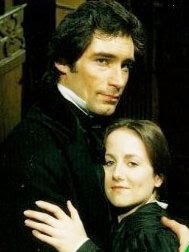

Timothy Dalton is THE Mr Rochester, and I'll take off my corset and fight anyone who disagrees ;)

Charlotte Bronte - Jane Eyre

I read through all of Charlotte Bronte's novels this year. It began with Jane Eyre - I always name it as my all-time favourite book, but I hadn't read it for a while, and I was afraid to find out if it had lost its charm. Reader, fear not. Fierce, independent Jane, who holds fast to her integrity whatever the world throws at her, is a timeless heroine. And I still get a deep thrill at the words, 'Reader, I married him.'

Kazuo Ishiguro - The Remains of the Day

I totally hated the ending of The Buried Giant, and there's no way I'm going to frighten myself with Ishiguro's dystopian novels, so it took me a while to try this one. In the 1950s, a butler takes a road trip to meet a former housekeeper, and reflects on his life of service to a high-minded but ultimately misguided lord. A beautifully written, bittersweet reflection on lost love and lost causes, but with a little hope at the end.


The iconic New Forest ponies

Edward Rutherford - The Forest

Rutherford seems to have carved out a niche penning huge tomes that cover centuries of history. I'd read the more well-known Sarum, but I think I enjoyed this even more. The novel tells the stories of the families (and trees and animals) who inhabited the New Forest over a thousand years of history (yes, in Britain, a forest gets to be called new when it's only a thousand years old). This, and Sarum, is really a series of interlinked novellas, so they're a good choice if you love historical fiction and/or want to tackle a large book for a reading challenge.

Molly Martin - The Art of Repair

I read this in May, but still keep turning to it. This slender volume is part clothing repair manual, part paean to the art of caring for our belongings. Her few methods are simple (well, OK, I don't feel up to tackling Swiss darning yet), but her love for mending is infectious. And slowly Sashiko stitching a patch on my son's trousers, when I could replace them for a few euros, feels like a subversive act of rebellion in our throwaway society.



Phillipa Langley and Michael Jones - The King's Grave

As a teenager, I was a devoted Ricardian, reading everything about Richard III I could get my hands on, fiction and non-fiction. I even wrote 'Richard III is innocent' on the front of my school history notebook! The King's Grave is Langley's account of the excavation of the Leiceistershire abbey that led to the discovery of Richard III's grave in 2012, interspersed with Jones's revisionist biography of this controversial king, England's last monarch to die in battle. I have a more moderate view of Richard now, though I'm still inclined to think he did not order the murder of the Princes in the Tower. And for 2022, I'm exicted to put Nicola Cormick's new novel The Last Daughter (US: The Last Daughter of York) on my reading list, a historical fantasy take on the fate of the younger prince.

I think 2022 is going to be a slower reading year, as my main goals are more Slovene classes (got to get fluent in the language since I live here) and finishing the sequel to my novel A Dorset Summer. But my six-year old is now into longer chapter books, so I'll have more interesting kiddie reading. We're currently up to The Voyage of the Dawn Treader in the Narnia series. How was your 2021? Do you have 2022 reading goals, or, like many of us, have you ditched your usual plans? If you have a review, I'd love to link to it!

A roundup of 2022 Quicklit reviews:

Katie @ The Cozy Burrow

Shannon @ Shannon Enjoys Life!

Elena @ A Beautiful Hope

Susan @ In the Storm

Sunday, 14 June 2020

A Dorset Summer is here!


Well, maybe not quite in the actual county right now, but my novel is finally published on Amazon! A promise to myself it took seven years to keep (no, that's not the novel blurb, but real life). But talking of blurbs, here is the back cover blurb:

A holiday in Dorset with her wealthy, newly-divorced cousin seems the perfect escape from Phoebe's mundane life as a governess – until a man walks from the sea at Studland and into her life. Phoebe is drawn inexorably into a relationship with Alex Milne, a reclusive, tormented WWI veteran, even as she is courted by handsome, gentle landowner James Stephenson. The three form an uneasy triangle of lovers and allies fighting to save the Dorset countryside and its way of life – but the ancient land exerts its own forces on their lives. Trapped between her passion and her integrity, her head and her heart, Phoebe must make choices that compel her to confront her past and threaten to destroy her future.

The alternative cover - I'm waiting for my daughter to edit it :)


And here is the trailer - it's amazing what you can do with no knowledge whatsoever:


Now available at Amazon:

Amazon.com

Amazon.co.uk


Friday, 15 December 2017

Quick Lit December 2017

Linking up with Modern Mrs Darcy for short reviews of our current reading.

It must be the stress of Thanksgiving and Christmas creeping up on me (and other little things, like mice falling from my ceiling) that drove me to comfort reading this month.


The Life-Changing Magic of Tidying Up by Marie Kondo
I dip in and out of this book frequently. Those who describe Kondo as some sort of decluttering nazi probably haven't read her book. Yes, I like it for the reassuring message that I can get my life into some sort of order, but I'm also enthralled by the peek into Japanese culture, and by the memoir of an introvert woven into its pages, lit by little sparks of understated humour. I would have re-read her other book, Spark Joy, but, after searching for a while, I remembered I'd let my husband send it off to Decluttr [sic] in a tidying fit. Queue irony.

Miss Marple: The Complete  Short Stories by Agatha Christie
Christie is in the limelight again, with a lavish remake of the Murder on the Orient Express movie, which reminded me that I've only read one Christie novel in my life, and it was so long ago, I can't even remember what it was. A short story collection worked well for Thanksgiving travels. These are mostly literal armchair mysteries, where guests share crime stories that are solved by - well, you know who.

Mr Rochester by Sarah Shoemaker
After the emotional trauma of reading The Buried Giant, I needed a story with a guaranteed happy ending, and the ebook price overcame my resolve to avoid buying new books. Modelled on the structure of Charlotte Bronte's novel, this tells the life story of Edward Fairfax Rochester. And yes, you get that famous four-word sentence at the end! I've had a literary crush on Mr. Rochester since I was fourteen, and this novel did not disappoint.

Mr. Putter and Tabby Pour the Tea by Cynthia Rylant
Even my toddler got the comfort treatment this month. The Mr. Putter books, if you don't already know, are sweet stories about an old man and his pet cat. They are intended as beginning chapter books, but the simple sentences and repetition make them lovely read-alouds for toddlers as well.

And since we're part way through Advent:


Advent and Christmas Wisdom from G.K. Chesterton
I've used this book for many years and am still not tired of it. Ligouri Press publishes several books in this series, for both Advent/Christmas and Lent/Easter. Each focuses on a well-known Christian writer, and the daily readings consist of a quote, related Scripture, prayer and suggested action. Everything you need for observance and reflection on the season(s) in one little book. I'm on board with the call to canonize Chesterton - Battersea needs its own saint.

We Were There by Eve Bunting
It's the eve of the Nativity, and nature's unloved creatures - the scorpion, toad, spider, cockroach, snake and rat, obey the pull to traverse the desert to that stable. Brings a lump to my throat almost every time.

Merry Christmas, Yule, Saturnalia, Hanukkah, or whatever you celebrate this time of year, and may 2018 be full of good books.


Wednesday, 15 November 2017

Quick Lit November 2017

Linking up with Modern Mrs Darcy for quick reviews of books we've read over the past month.


Untangled by Lisa Damour
You know an author is on your side when she jokes about your teenage daughter straining her eye-rolling muscles. Untangled is a mix of psychotherapy, scientific findings and practical advice to help you help your daughter negotiate the often choppy, sometimes stormy, seas of the teen years. I appreciated that the gist of the book was that yes, your daughter is being normal when she acts like a little witch, but yes, she still needs you to insist on models of decent behaviour. A recommendation from Modern Mrs Darcy.

Everything that Remains by Joshua Fields Milburn, with interruptions by Ryan Nicodemus
I was out of luck trying to get this via interlibrary loan (or I was away for the summer when it came in), so when I saw that The Minimalists were offering this and one of their other books as a free PDF download via Gumroad, I took the chance. If prose can be purple and spare at the same time, this book is it. The writing is a little offbeat (after all, they did co-found Asymmetrical Press), but if you are already familiar with The Minimalists, you might enjoy this more in-depth memoir, or narrative non-fiction as Josh calls it. For a how-to on minimalism, try the other free download, Minimalism: Live a Meaningful Life.


The Buried Giant by Kazuro Ishiguro
My first spontaneous reading choice in a looong time! The first two books on my list were missing from the library shelves, so I thought, OK, I need to finally tackle The Remains of the Day - but Ishiguro has just won the Nobel prize for literature, so all his books were on display and that was gone. With a toddler rapidly losing patience, I grabbed this. The story is set in post-Arthurian Britain, where people seem to have lost the capacity to hang onto memories. An old couple, Axl and Beatrice, feel the pull to leave their settlement in search of the son they can't fully remember and haven't seen for years for reasons they can't recall - and whose whereabouts they are not certain of. Along the way, they gather unlikely companions and a wider quest emerges, with themes of memory, justice and mercy. I haven't read Ishiguro before, so I wasn't ready for the slap in the face that is characteristic of his work. I found the novel intellectually satisfying but morally unsettling.

Frog went A-Courtin', retold by John Langstaff
This is the Caldecott Medal version of the ancient folk song, where the author weaves together various versions of the song to form a story with a happy ending. My toddler's summary of the story of Frog's courtship of Miss Mouse? "The frog had a sword and horse and went to fight." Ahem...


Happy Thanksgiving to those stateside. Hope you get some time to escape the crowds and read!

Friday, 20 January 2017

7 Quick Takes 48: The Second Amazon Gift Card Edition


1. Yes, yes,  I know you've got plans to read lofty books this year. You're currently in a bidding war on ebay with an Orthodox seminarian for the complete works of St. Augustine in Latin. You're just hoping it's Pig Latin. But Lent doesn't begin until March, so it's time for my second annual January round-up of books you can buy with your Amazon gift card, which just happen to be written by talented friends of mine who still let me hang out in their online critique group, even though I haven't attempted a novel for two years. All are easy reading - but after all that work keeping the family happy over Christmas, you deserve it.

Sexual content. Ho hum. One person's mild curry is another person's too spicy. So, I'm giving my personal opinion. If it helps, I'm bored by sex scenes that are only there because hey, it's time for a sex scene. On the other hand, I don't mind more graphic sex or violence if justified by the context. I guess that didn't help, but it's my disclaimer.

2. A Savage Exile: Vampires with Napoleon on Saint Helena by Diane Scott Parkinson
"Napoleon and vampires?  I really shouldn't, but it sounds so tempting..." Yes, I can hear you thinking ;)  Diane has written a couple of parodies, and I think her lighthearted side shows through in the paranormal part of the novel. This is scary light, a story to enjoy, not keep you awake at night. Or, you could read it for the sensitive and poignant portrait of Napoleon's small court in exile on Saint Helena. Sexual content: mild to medium. It has sex outside marriage, but does that count with an abhuman? Maybe Saint Augustine has something to say about that, because he has something to say about almost everything. So you know you'll find the answer during Lent. Which is your excuse to go ahead and read this first.

3. The Scandalous Lady Mercy by Maggi Anderson
I've said this before, but it was maybe a year ago, so I'll say it again: I don't read any mainstream romance except for Maggi's books. The sexual content in general is mild to medium, usually after marriage, and most also have an element of thriller or mystery as a subplot. This is the fifth and final installment in the Baxendale Sisters novellas, and they feel like old friends to me by now. Lady Mercy is in her first Season, and her parents expect her to make a good marriage, but she wants the right man, not the richest. However, an accidental scandal means she must get engaged to the distant Viscount Northcliffe. Can she escape a wedding, or should she try to find love in a marriage of convenience? A short, put-your-feet-up-with-a-cup-of-tea-and-indulge-yourself read.

4. Tuesday's Child by Rosemary Morris
I've probably also said this before, but I admire Rosemary. She spent decades trying to break into publishing, and was about to throw in the towel when her novels were picked up. Now she has a career as a novelist in her 'retirement'. Inspiration never to give up. Her books would be classed as "sweet romance", with the bedroom door always firmly closed. I think this Days of the Week series has grown stronger book by book. Tuesday's child is Harriet Stanton, a penniless young widow with a son, who has been reluctantly taken in by her father-in-law, the Earl of Pennington. However, the old man soon has plans to take control of her son's upbringing. In her fight to save her son, she discovers an ally in the Reverend Dominic Markham, but soon realises she is also battling her loyalty to her dead husband as her feelings for Dominic grow.

5. Flora's Secret by Anita Davison
"Deja vu all over again" as my husband says. I reviewed this novel under its original title of Murder on the Minneapolis. At the time, I mentioned that the publishing company had been sold to a firm that didn't have a big fiction list. Thankfully, this series got a deserved reprieve with another publisher. I mean, who doesn't want to read about a couple named Flora and Bunny? I'm running out of time writing this, and so I'm cheating with a cut and paste of my original review:

Governess Flora MacGuire boards the SS Minneapolis with her young charge, Viscount Trent (Eddie), bound for England. Soon, she finds a body on deck. Despite the evidence she has seen otherwise, the incident is declared an accident. But another murder soon follows. Are Flora and Eddie in danger because of her involvement? And what of the budding shipboard romance between Flora and the upper class Bunny Harrington: surely the class divide will be too strong once they reach the shores of England?
This is a deftly written, classic, cosy whodunnit, with a large net of characters hiding secrets and probable motives, unexpected twists, plus a charming romance.


6. Erasmus T. Muddiman: A Tale of Publick Disptemper by Katherine Pym
In full disclosure, I've read part of this novel in the drafting stage, but not yet the final printed copy. However, from what I saw, Katherine employs her usual skills with dialect and detail to thrust you into the heart of seventeenth century London. This is part of a series set in the 1660s, leading up to the Great Fire of 1666, and the spectre of the flames hovers through the books. In this novel, we are up to 1665, seeing the city and war through the eyes of eleven-year-old Erasmus as plague and pressgangs close in to threaten the survival of his family and those around him. Although the protagonist is a young adult, it makes an enjoyable adult read, too.

7. Lastly, since I try to be honest in my book reviews, I want to mention that several of these (Tuesday's Child, Savage Exile, Erasmus) are published by Books We Love, a mainly e-publisher which takes on only previously published authors. The plus side to this is that they have a lot of very talented writers on their books who, in the great publishing lottery of life, weren't picked up by larger publishers, or whose relationship with a bigger publishing house has ended. The minus is that the covers aren't always the best, and the number of typos can be irritating (to be fair, errors for ebooks are slightly higher in general, and usually quickly spotted and corrected). So please don't judge their books by either :)

 Lastly lastly, Amazon keeps changing its review policy, which is pretty hard on self-published authors, or those who hover at or below mid-list. Currently, books get on a "recommended reads" list with twelve or more reviews. So, if you like a book you read, please help the author with a quick review. I usually just pen a few lines - no need for a paraphrase of the plot - but it can make a big difference.

On your way to Amazon, don't forget to check in with Kelly at This Ain't the Lyceum for more quick takes

Friday, 18 March 2016

Seven Quick Takes 28: Ying Tong, Piddle, and Pi

1. Spring Break this week. So glad it coincided with the clocks going forward. It feels so much better to cast my bleary eyes on the the clock and see that the baby woke me up at 'seven', even though it's really still six.

2. Luckily, the break coincided with the release of Rethinking Women's Health: A Guide to Wellness by Alison Buehler, who lives up the road from me. I promised a review when I'm done, but for now I can't help contemplating the price of local fame. I mean, people here are going to bump into Alison in the supermarket and think, She's the woman who wrote the book with the word "vagina" splattered all over it. Should make for interesting conversation over the bananas.

3. Monday, of course, was Pi Day (3.14). We had a get-together with middle daughter's math club. I didn't get a picture of all the pies, which were pretty much demolished. so here's a t-shirt that does double duty for Pi Day and Speak like a Pirate Day (Sept. 19). Geeks, you need this t-shirt.


4. To continue the theme of our renovations as a metaphor for Lent, I offer:

[OK, I was going to offer a photo of our upside-down tub being painted, with a clever "whited sephulchre" theme, except in hunter green, but apparently I forgot to take a photo before it was put back, so use your imagination here.]

But whatever you do to try to hide or cover up the state of your soul, you've got nowhere to go.


In truth, we weren't playing pioneers. We did have one toilet. In a room with no door. A good chance to practice whistling.

I suppose to really carry this through, the renovations should have gone on until Easter, but our sanity wouldn't have survived. As it was, there was a three-day delay because of torrential rains, and tempers were running pretty short. But, all was done on Monday, and I'm still thanking my husband profusely for not being a DIY-er, and letting the professionals do it all quickly.

5. Our two current family activities are hot tubbing and watching Sherlock (we're now only a season behind the rest of the galaxy). I jokingly suggested we should set a tv up outside and combine the two. And as this was a week off, and you have to do something goofy, with the help of a card table and extension cord... voila. Verdict? Like sitting in hot water watching tv.


6. Even though I've been changing the baby's nappy every day for his whole life, it's still usually a tragedy of operatic proportions. The other day, I was dredging my brain in desperation for something to distract him - and pulled up the golden oldie, The Ying Tong Song. Here's a little ditty that my mother sang to me, as she tucked me into bed when I was ninety-three... Complete success, and still working. Bless you, Spike Milligan, and I hope you are enjoying your reward.


7. There, now I'm done - and I have the choice of three loos to go to! For more Quick Takes, visit This Ain't the Lyceum.


Friday, 26 June 2015

Murder on the Minneapolis.. and other summer reads

Back to the previous focus of this blog to highlight good reads that might slip under your radar. Brought to you once again from my talented friends: seven summer reads recently or about to be out. Amazon links included (for which I get no remuneration!).

1. Murder on the Minneapolis by Anita Davison
The only physical book I know I'm going to buy this summer (because I want an autograph!). I've seen drafts of sequels, but missed out on the first, so I'm eager to get the beginning of the story. And how could you not want to read about a couple named Bunny and Flora? Due out on June 30th in the UK, October in the US.

The official blurb: Flora Maguire, governess to thirteen-year-old Edward, Viscount Trent, is on her way home to England from New York after the wedding of her employer’s daughter. Conscious of her status among a complement of only first class passengers on the ship’s maiden voyage, she avoids the dining room on the first night, but meets the charming Bunny Harrington on deck, a motor car enthusiast. 
Flora finds the body of a man at the bottom of a companionway, but when his death is pronounced an accident, she is not convinced. The mystery of her mother’s disappearance when she was a child young drives her to find out what really happened to the dead man.
She confides her suspicions to Bunny, and a German passenger, both of whom apparently concur with her misgivings, but the ship's doctor and the captain are reluctant to accept there is a murderer on board.
Flora starts asking questions, but when she is threatened, followed by a near drowning during a storm and a second murder - the hunt is now on in earnest for a killer.
The UK link.
The US link.


2. The Apothecary's Widow by Diane Scott Lewis
I mentioned this in a previous post - a book for those of us who know that love isn't confined to twenty-somethings with perfect bodies. I hope Diane won't mind my remarking that the heroine is much more down to earth and relatable than that slightly sultry cover picture suggests.


The official blurb: Who murdered Lady Pentreath? The year is 1781, and the war with the American colonies rages across the sea. In Truro, England, Branek Pentreath, a local squire, has suffered for years in a miserable marriage. Now his wife has been poisoned with arsenic. Is this unhappy husband responsible? Or was it out of revenge? Branek owns the apothecary shop where Jenna Rosedew, two years a widow, delights in serving her clients. Branek might sell her building to absolve his debts caused by the war—and put her out on the street. Jenna prepared the tinctures for Lady Pentreath, which were later found to contain arsenic. The town’s corrupt constable has a grudge against Branek and Jenna. He threatens to send them both to the gallows. 
Can this feisty widow and brooding squire come together, believe in each other’s innocence— fight the attraction that grows between them—as they struggle to solve the crime before it’s too late? 
The UK link.
The US link.


3. The Craigsmuir Affair by Jen Black
Jen self publishes, including being her own cover designer, and her writing puts many conventionally
published authors to shame. Due out July 20th.

The official blurb: In 1893 Daisy dreams of a career as an artist but runs up against the rock that is Adam Grey, who distrusts women and thinks wives should be content with home and family life. When a valuable painting goes missing in the country house where they are both guests, Adam turns detective and Daisy must prove that she is not the thief Adam initially believes her to be. Does she want love and marriage or to fulfill her dreams?
The UK link.
The US link.


4. The Barbers by Katherine Pym
Katherine takes you into the minds of 17th century Londoners not just through her recreation of their lives, but by giving a sense of their language, too. If you enjoy a slightly different reading experience now and then, check out her works.

The official blurb: It is London 1663 and science flourishes in a mini-Renaissance. Celia Barber shares her father’s shop; he barbers, and she heals during a time when women are not allowed to practice medicine.
As a licensed barber, Celia longs to visit the Royal Society or Surgeon’s Hall to see a dissection, but women are not allowed. She befriends a viscount who sneaks her into the Royal Society, where she sees an experiment and meets Robert Hooke, the great scientist of the day. Celia’s sister works as a domestic in Whitehall Palace, who finds an ancient coin. Will it lead to hidden treasure? 
Life in London is harsh. People sicken and die easily. As a healer, Celia sees tragedy. She cannot save all who come to her. Hardest of all, will she be able to save her brothers?
The UK link.
The US link.


5. Lady Faith Takes a Leap by Maggi Anderson
This is the latest in Maggi's Baxendale Sisters series. Once I got through Georgette Heyer in my
adolescence, I never cared for traditional romances... until I read Maggi's stories. Her heroes and heroines are easy to empathise with, and for those who care about the 'bedroom door' issue, the sex is very often post marital and not uncomfortably explicit.

The official blurb: Dutiful daughter Faith Baxendale just wants to please. Faith isn’t as adventurous as her younger sister, Hope, gadding about the Continent with their aunt, nor as rebellious as her elder sister, Honor, who planned to become a card sharp. And Faith couldn’t lose herself in her art like sixteen-year-old, Charity. Even Mercy, at fourteen, shows more backbone!
After Faith’s first Season ends, her father urges her to marry the man of his choice. But when Lord Vaughn Winborne, a neighbor Faith had a crush on while still in the schoolroom, arrives home for the Brandreth’s hunt ball, surprising even to herself, Faith is drawn again towards a man her father would never consider.
The youngest Brandreth male, Vaughn, is the black sheep of the family. His elder brother, Chaloner, Marquess of Brandreth, still looks upon him as a reckless youth, and Vaughn is determined to prove him wrong.

A chance comes in the form of a scandal not of Vaughn’s making, and he must learn to trust Faith, who, when all’s said and done, has always known her own mind. The UK link.
The US link.


6. The Captain and the Countess by Rosemary Morris
Rosemary keeps the bedroom door firmly shut, writing old-fashioned romance that reflects its time,
not modern thoughts and mores clothed in long skirts . She's been working on a series in the Regency era lately, but this is part of her late-Stuart romantic novels.

The official blurb:Why does heart-rending pain lurk in the back of the wealthy Countess of Sinclair’s eyes? 
Captain Howard’s life changes forever from the moment he meets Kate, the intriguing Countess, and resolves to banish her pain. Although the air sizzles when widowed Kate, victim of an abusive marriage, meets Edward Howard, a captain in Queen Anne’s navy, she has no intention of ever marrying again. However, when Kate becomes better acquainted with the Captain she realises he is the only man who understands her grief and can help her to untangle her past.
The UK link.
The US link.


7. All Kinds of Hell by Amy Dupire
Something completely different to round out my seven: a contemporary YA that explores sisterhood and faith in all its facets. Amy used to live in my town - I still miss our chats on life and writing, and most of all her quirky humour that also plays out in her books.

The official blurb: Self-professed Über-geek Joely Malone blames herself for the car accident that nearly kills her and her sister, Becca. But she has no one to blame for Becca's dramatic conversion to Evangelical Christianity, except for Becca's friend Katie. And, perhaps, God. In the following weeks, as Becca attempts to save Joely from eternal damnation, Joely comes to believe that there are all kinds of hell, from her alienation from her sister, to their father's functional alcoholism, to her increasingly tenuous relationship with her musician boyfriend, Aaron.
In a final, desperate attempt to reconnect with Becca, Joely decides to give Jesus a chance. She volunteers with Becca for the church's Hell House event, an interactive drama designed to scare the Hell out of attendees and chase them straight into Heaven.
But it's only when Joely sees how far Becca has gone that she can face her greatest fear and take a step of faith into the unknown.


The UK link.
The US link.
For more Seven Quick Takes, join Kelly at This Ain't the Lyceum.


Wednesday, 13 May 2015

Review round-up

I'm putting my affairs in order/salving my conscience by catching up with with shout-outs and reviews I've been promising for months. Yes, I have critiqued, beta-read or edited these, or have other connections with the authors, but I'm also standing by their talented writing. I'd like to say I'm amazed by the rubbish put out by the big publishing houses versus the quality I so often see from smaller publishers or in self-published work - but no more, alas. So, in historical order, here are:

V.L. Smith - The White Spider of Savignac


The official blurb: When Sir John FitzAlan, lord of an elite mercenary company, is rewarded with the Aquitainian barony of Savignac by Richard Lionheart, his future seems straightforward enough: restore a neglected estate to readiness for war and make the best he can of an arranged marriage to its baroness, Mellisande, a woman he has never met. 
Twice-widowed Mellisande, however, is in no mood for a third marriage. Far from the demure chatelaine John expects, she is an expert vintner and herbalist – skills her people, and the local bishop, suspect she used to murder her two previous husbands.
As John’s disciplined soldiers clash with the unruly local people, and relations with his wife grow colder, John begins to wonder if the tales told of her are true. Will he be Mellisande’s next victim?
My two penny's worth: For those of us who are no longer twenty, Ms. Smith creates a mature hero and heroine you can connect with from the first pages of the novel. The setting is richly and believably detailed and the secondary characters fully fleshed and engaging. Having read other works-in-progress of Vicki's, I can attest to her particular talent in creating sexy vikings :) I especially appreciated the pace of the story - she avoids the current pressure for break-neck speed and develops a plot you can actually savor. I managed to read and enjoy it while still in the throes of morning sickness - what higher accolade could there be?


Diane Scott Parkinson - Ring of Stone


The official blurb: Rose Gwynn is determined to study as a physician in 1796 in England, a time when women were barred from medical school. When she prevails in assisting the local doctor, Rose uncovers a shocking secret that will threaten Dr. Nelson’s livelihood. Servant Catern Tresidder returns to the Cornish village to confront the man who raped her and committed murder. After Rose’s sister is betrothed to this brutal earl, Catern struggles with her demons to warn Rose of the truth. Rose’s attraction to a man far beneath her further complicates her situation. Three people fight society’s dictates to either face ruin or forge a happy ending. Through it all, the ancient stone circle near Rose’s house holds the key to her family’s past, and is positioned through the myths of Cornwall to save her sister’s life.

My two penny's worth: Ring of Stone is a romance by the strict literary definition: a story of love and adventure in a setting where the natural and supernatural coexist - here, the juxtaposition of emerging modern medical practice and the lingering magic of ancient Cornwall. Diane's prose is several cuts above the average romance novel, and the subplots make for a satisfyingly complex read. If you like Ring of Stone, check out Diane's latest Cornish novel, The Apothecary's Widow. Like White Spider, it features a mature hero and heroine the rest of us can relate to.


Amy Dupire - god-thing and other weird and worrisome tales


The official blurb: A Northern transplant teenager chafes under the culture of her Southern U.S. high school and creates her own deity. A reanimated corpse joins a zombie crawl, and stuffed animals spill the beans on their darkest secrets. These award-winning, YA short stories offer curious insights into human nature with humor as well as an unsettling view toward its darker truths. In this collection of tales, you’ll find fortune-telling pancakes, second-tier superheroes, and the occasional possum. 
And it may make you think twice before opening the kitchen cabinets.


My two penny's worth: I've read a lot of Amy's work, published and unpublished, and I love her oddball, dark, humorous take on life. As the blurb says, several of these stories have, deservedly, won or placed in writing competitions. It's hard for me to pick a favourite, but "Key Lime Pie at the Nightmare Diner" and "The Pancake Reader" would definitely be contenders. For young adults or preteens, depending on your child's maturity level/ threshold for the slightly scary.

Tuesday, 20 March 2012

A modern approach to reading


It’s a fantastic concept.  No more bulging bookshelves, or buying anthologies created by other people, which are half full of texts you didn’t want and will never read.  Instead, you can be in charge of your library.  Just your favourite books, all together, your own personal and portable compendium.  And the name of this great invention?  A scroll…


Monday, 22 August 2011

Self-published Historical Fiction


 Part Two - A reader's guide
In my previous post, I tried to make a case for respecting and embracing self-published historical fiction.  If you find yourself interested in exploring self-published historical fiction (often lumped with small publishers as ‘indie’), here are some suggestions to get started.  All these links are those I am familiar with or have been recommended through other authors – perhaps they’ll lead you to others.

  • The Historical Novel Society will not review self-published books in its printed review, mainly from lack of space (ebooks are also not reviewed in print).  However, they do consider them for their online review.  Reviewers (like me!) are unpaid and are supposed to abide by a code of conduct that includes no contact with authors of the books they review.


  • A site that gets you straight to indie authors in this genre is Historical Fiction ebooks, found at historicalfictionauthors.net.  Authors become part of this network by invitation only.


  • Another popular site is Indiereader.com, which has both ebook and historical fiction pages.


  • The Independent Author Network is a good resource for readers as well as writers, though it’s open to any independent author who makes heavy use of social networking tools (OK, for me heavy means they tweet!).  Their Avid Reader’s Café offers recommendations for what they consider the best in indie publishing.

A few author sites you may wish to check out include:

  • Mirella Patzer, who helped me with suggestions for this post, writes historical women's fiction, often with an Italian setting.  She also reviews historical novels, including self-published ones, on her website, History and Women.

  • Lisa Yarde, at one time a member of my critique group.  I don’t know her personally, but I often see her comments on Facebook via my author friends!  She has written several medieval novels.

  • M. Louisa Locke.  An example of how far you can get with self published fiction, Locke has been a Kindle bestseller with her Victorian mystery series set in San Francisco.

Looking further into this topic both whetted my appetite for discovering gems that fit the scope of my blog (books outside the mainstream) and encouraged me not to dismiss self-publishing as an option for my own work.  I hope it does the same for you.

Sunday, 14 August 2011

Self-published Historical Fiction

Part One:  My Rant An Overview


“More and more authors,” says Mirella Patzer, “are choosing the self-publishing route.”  In fact, I turned first to Mirella when compiling this post because she’s a historical fiction author whose work I love – but who chose self-publishing over traditional methods.  Yet, when the topic came up amongst my online critique group, opinions on both sides were strong.  Why then, would historical fiction authors choose to self-publish, and what are the advantages for readers of the genre?

It’s easy to dismiss those who self publish as vanity authors, but in fact they follow in some august footsteps.  Authors who began, or continued, by self-publishing include Mark Twain, Walt Whitman, James Joyce Virginia Woolf, Margaret Atwood and John Grisham.  And you may not know that the queen of American style guides, The Elements of Style, was first self-published! Yes, people self-publish badly written books, but who among us has not at one time or another read a book published by one of the big publishers that left us wondering how on earth it got into print?

And talking of big publishers, it’s no secret among writers that most changes in publishing houses have not been to the advantage of the author.  Tasks from editing to publicity can now be put on the author’s back.  The decline of the copy editor in particular has been very noticeable to me.  Ten years ago, it was rare to find a typo in a book; now, I see them with an alarming frequency.  Independent author Kristine Kathryn Rusch takes an in-depth and somewhat alarming look at the wider subject in her blog The Business Rusch.

True, historical fiction is doing pretty well in a time when readers are choosing genres that take them away from reminders of the present economic decline.  However, historical fiction authors can themselves be the victims of the present day: agents and editors, afraid to take risks, can push for more formulaic writing; publishers drop established mid list authors in favour of pursuing the next big thing; publishing companies fold overnight.  Almost every author I know, including myself, has either personally suffered one of these setbacks or known others who have.  Little wonder then, that many follow the heroes and heroines of their own books in taking control of the situation.

Why should we automatically turn up our noses at self-published historical fiction?  The author has chosen to go into business for herself.  If she were making and selling clothes, we wouldn’t dismiss her because she wasn’t working for a fashion house – we’d see if we liked her product.  Perhaps we need to ask why books have this snob value. 

The new force in self-publishing is, of course, the ebook.  Now that e-readers aren’t just for the likes of Captain Jean-Luc Picard, authors can take advantage of the low overheads and get their work out to readers at competitive prices.  However, this isn’t true when it comes to self-publishing the traditional way, where the cost of a softback is almost as much as a hardback, a difficult hurdle for an author who is trying to build up a readership.

Even established authors have been choosing to take control of their back lists, using the flexibility of ebooks to self-publish out of print titles.  An example would be historical fiction author Kathy Lynn Emerson, who has partnered with other professional authors on the site A Writer’s Work to offer both previously published and original work in ebook format at extremely low prices.

To sum up the advantages of self-publishing: authors get control of their work, the opportunity to build up an audience with lower overheads, and the chance to continue to profit from their back lists.  Readers get a wider choice and cheaper books.  So, how do we get the two together?  In the second part of this post, I’ll review some of the ways readers can sift through the chaff and find quality self-published historical fiction.

Thursday, 24 February 2011

E-publishing: a reader’s perspective

The world of e-publishing slipped by under my radar for several years.  That is to say, I knew it was out there, but I had no interest in it and saw it as something very secondary to ‘hard’ publishing.  Recently, though, the involvement of fellow writers in my critique group, as well as the Kindle-Nook debates, drew me to explore some of the possibilities of the e-publishing world.  It quickly became such a big subject that I’ve decided to divide it into two: this article is from the reader’s perspective, but I’ll follow up with the writer’s perspective.
(Disclaimer (!): this is not a thoroughly researched article, but simply my sharing with you what I have been learning, and how my own responses to e-publishing have changed.)
When people first began predicting things like “Someday we’ll be reading all our books on computers,” my reaction was one of cynicism, if not outright hostility.  I spend enough hours at a bright computer screen, and I couldn’t imagine an experience less cosy or intimate than huddling over my computer—even a laptop (which is on my knees as I type!)—to read a novel.  It turns out that plenty of other people have that feeling, too, for lo and behold along came E ink® technology, which is designed to simulate the look of a printed page.
Amazon’s Kindle, and Sony’s Reader emerged, designed to give that ‘holding a book’ feeling, yet I managed to bypass them both.  But the Barnes and Noble Nook captured me.  Admittedly it might have initially had something to do with the fact that their colour scheme matched my own favourite shades of blue and green (advertising works, even on the media-savvy).  But, as I wasted idle time browsing for more information, I realized that an e-reader had several features that made it attractive and useful (remember, William Morris enjoined us to have nothing in our homes that is not beautiful or useful).
  • We travel a great deal, and this would cut down drastically on the hundredweight of books my elder daughter hauls back and forth across the Atlantic.  Given that more than once I have been charged for overweight suitcases, this is a big consideration.
  • We also wanted to encourage said elder daughter to read more classics, and this seemed like an easy way both to bribe her and to offer a good selection without sending our bookcases into therapy.
  • Our bookcases are overflowing (see above).
  • Classics are readily available in free or cheap versions (see above above).
  • Out of print books useful to my medieval research are being made available in electronic format.
  • The screen really is like a printed page, so no computer-induced headaches.
  • I can also put audio books on it, thus keeping my library together.
  • Barnes and Noble is already our preferred online bookstore.
  • I can purchase and upload books and files from other booksellers in formats such as ePub and PDF.

As you’ve gathered from some of the remarks, I did go ahead and buy a Nook, and I have to say I’m more than happy with it (and not being paid to say so).  Bear in mind this comes from someone who is very low tech, who barely uses a dryer for her clothes, let alone remembers to turn on her refurbished cell phone.  What additional features did I find I liked?  Well, I can download samples of books before I choose to buy them; it’s easier to use than my cell phone; and the wifi connection is probably better than said cell phone’s.  But best of all, it is curing me of a recently-acquired bad habit of skimming ahead in books.  And, being the size of a paperback, I can still curl up on the sofa with it.