Wednesday, 31 July 2019

Medieval Days 2: Celje Castle

I tagged along (in a semi-official capacity) to the annual maths workshop in Rogla again this July. Here's last year's post. I didn't write an update because, with no elder children to serve as babysitters, my experience was not as hedonistic or adventurous as last time. (Basically I took the four year-old swimming every morning and read chick lit while he was passed out in the afternoon.)

Anyhow... on the way back we decided to stop off at Celje Grad (Celje Castle), with Ted's American PhD student in tow. The Counts of Celje rose to power during the medieval period. In an effort to free themselves from subordination to the Hapsburgs, they forged an alliance with Hungary, which propelled them onto the scene of medieval European politics and helped them rise to the rank of Princes of the Holy Roman Empire. Unfortunately, their line petered out soon after and ended with the assassination of the last heir in 1456. Their castle in Celje was abandoned in the 18th century.

Photo credit: www.celje.si

We visited a castle they owned in Croatia, Veliki Tabor, at the end of our Krapina holiday, but I never got around to writing about that visit. It was interesting to note that both castles claimed to be the site of the infamous, tragic legend of an heir to Celje, Frederick, and his low-born love, Veronika. I think that's worth a blog post in itself, but in summary, Frederick's father, Herman II, not too much of a nice guy by all accounts, forced his son to marry dynastically. Frederick fell in love with a non-noble woman,Veronika, and abandoned his wife. Herman demanded a reconciliation, but mysteriously (or not, ahem), Frederick's wife was found assassinated the morning after, and the two lovers went on the run. The irate father eventually captured them, had Veronika drowned, and threw Frederick into a tower for several years of solitary confinement.

Barbara became Queen of Hungary, Bohemia and the Holy Roman Empire

The infamous Herman

The castle claims to be the largest (by area) in Slovenia. I don't know if that is true, but the visit was pretty much castle tour plus bonus thigh workout, climbing hills, ramparts and towers, surrounded by wonderful views. They seem to have rotating, often interactive, exhibits, so not everything was open (including, sadly, the virtual reality combat zone).

Yes, I am looking red, a result of my "forest bathing" experience in Rogla

A tour of our tour: The museum tower recreated castle rooms, complete with costumed mannequins: the armoury, a scribe's room, and a solar (lord and lady's living room). "Look," said our son, "there's a dead monk... and there's a dead princess."

Dead monk hard at work

"Frederick's Tower" was the supposed place of imprisonment for the disobedient son - where, according to accounts he almost starved to death and/or went insane. It posed a less serious dilemma for us: climb to the top first for the panoramic view, or down to the dungeon for the exhibition of torture instruments? We decided the tougher part was the climb, so that first, egged on our way by curiously computer-generated images of Veronika and Frederick. And then down to the torture chamber, which I went round swiftly, with the lightest of explanations to Alcuin. "Look at those funny hats people had to wear if they were bad!" Apparently this sort of torture was going on into the 18th century, which shocked me. I only took one photo, for the blog, because it turns my stomach if I think too much about what those devices actually inflicted on people (the wheel, the rack, the iron maiden... you get it).

Just...ouch

In a grassy, thankfully shady, inner ward to the side of the castle gate, there was a small medieval encampment, part of their living history programme, where we enjoyed our picnic. Whereas the players at Kubed waited for us to step into their world, the people here were aggressively interactive, almost leaping on us to drag us into the medieval spirit. There was a chance to dress up, handle weapons and armour, practise archery, check out cooking and camping, play an outsize game of skittles, or experience the tamer punishments of the stocks.


That's an unfortunate shaft of sunlight falling on Ted's head - not a bald spot

A stop at the somewhat ironically-named Veronika cafe - feeling thirsty, anyone? - rounded out the visit (plus a visit to the toilets, which curiously looked more like a modern art installation than a loo). Apparently, the Counts of Celje owned more than twenty castles in Slovenia alone, so I suspect we will be bumping into them again.


Touristy stuff. Good value. The entrance price for all four of us was about the same as one ticket for a National Trust or English Heritage property, plus we got credit for the cafe, which had normal (i.e. not tourist) prices. Plus, there were detailed, free guidebooks. During the summer, there are various events such as tournaments and concerts (with a major medieval event towards the end of August), and you can also book extras such as guided tours or a medieval feast. The website is not very good, though. Here is some basic info via the Celje tourist site, and their facebook page. We would have explored downtown, too (Celje is the third largest city in Slovenia), but it was a very hot day, and we knew it would be miserable traipsing around surrounded by concrete. We definitely plan to go back.

Friday, 26 July 2019

Medieval Days 1: Kubed

The village of Kubed, within the municipality of Koper, and not too far from the more famous Hrastovlje, puts on a yearly medieval festival. It runs over two days, with evening games and entertainment Friday night, and a pilgrimage-style hike of the region Saturday morning (apparently with goulash thrown in), followed by festivities on the grounds of a ruined castle fortress. With our teenager away in the UK digging up the Dorset landscape, we had no extra help with the hurricane that is our four year-old, so we had to opt for one event that looked child-friendly. We went for Saturday afternoon.


Taking a chance on the thunder showers sweeping across the region (see photo above), we set off up the ubiquitous winding roads, forearmed against the satnav inevitably missing the crucial hairpin turn. When we got to Kubed (someone was there to direct parking, hurrah), we got to wind uphill again, but on foot this time. But we were rewarded with free shots of local liqueurs - except Ted declined because he thought he'd be facing insane drivers on the mountain road home responsible.

In a fun (and clever) marketing ploy, we had to exchange our euros for the festival currency, the cubidum. And we had to exchange that within minutes for a child who saw all the food stalls and decided he was starving.


Not much was going on yet, though it was past starting time. There was a ring with assorted 'medieval' weapons for children to kill each other with. Alcuin was itching to jump in the fray, but it was mostly monopolized by older children, and he couldn't understand why it wasn't a good idea to throw himself in the middle of no-holds-barred eight year-olds. Eventually, the small(ish) kids got to take over, and he had his time in the ring.


At last! Something happened: a bunch of cosplay people processed up and down the pathway. As you can see below, included in the procession were people in national costume, who proceeded to put on a little play for bystanders. From my amazing grasp of Slovene, I can tell you it was about eggs and sausages, and then they played the accordion.


After that, it was historical reenactment time: players hung out by the armoury and practice areas, interacting with anyone who wanted, with music and dancing. And medieval drinking, which they deserved for wearing all those clothes - and armour - in the heat. One fun addition to the festival was a full-size combined trebuchet and catapult. When they felt like it, the players livened proceedings by lobbing some (non destructive) ammunition at the castle wall.


This isn't a great picture, but you need to note the chairs, because they appear in the next post, too!

Someone rashly let Alcuin handle a bow twice as big as he is. I stood well back to take the photo.


Finally, much later than advertised, and just as we were about to give up and leave, the combat began. And, after the wait, it was pretty good - professional and well scripted. But we had been there too many hours: Alcuin had reached the end of his attention span, and it was time to head off before all was over, thankful that we had missed the thunderstorms, and wiser for the next visit.


Ted pronounced that it was the sort of thing that would be more fun if you went in a group, with a designated driver (i.e. not him). I have to say that worrying trying to outrun (outdrive) the storms also made it less of a good time for him. I'd like to participate in some of the other events as well, so maybe there will be an update post coming!

Postscript. On the way to the car, Alcuin tripped on the pavement. It was a seminal moment - his first bad fall on concrete. He wasn't badly injured, but he was so traumatized he refused to walk for the next 24 hours. I had to carry him everywhere. Honestly, he is the most single-minded child we have, and that is saying something.

Touristy stuff. The festival, Medieval Days in Kubed, runs around the beginning of July. Here's a link to this year's festival (still working at time of posting), and one to a tad of history about the place. I promise, it's far from the worst mountain road we have been on. It's Slovenia, so you might want to turn up a little later than advertised - that's what the locals in the know seemed to be doing. If you are dedicated to efficient tourism (don't have small children), you might also squeeze in the famous Dance of Death fresco at nearby Hrastovlje.

Monday, 15 July 2019

Quick Lit July 2019

 Linking up with Modern Mrs. Darcy as usual. I didn't read too much in June. For one, I was in the US attending my daughter's graduation - and getting in a little literary pilgrimage to Salem, home of Nathaniel Hawthorne. For two, we are in the throes of purchasing a house. And three, I was a beta reader for an upcoming historical novel, which I loved but can't reveal!

Picnicking in front of the House of the Seven Gables in Salem!

Robin Sloan - Mr Penumbra's 24-Hour Bookstore
I picked this out of the library in my daughter's dorm house in Cambridge, MA, while staying there for her graduation (from MIT, excuse the proud parent moment). It's a tale of ancient literary mystery meets Google (quite literally). Out-of-work Clay stumbles into a job as a night clerk at Mr Penumbra's bookstore, and soon discovers that the mysterious night-time customers are novices and initiates into a centuries-old secret society. With the aid of his tech-savvy friends, he sets about finding the final solution to the coded secret left by its founders. I especially enjoyed how this novel wove friendships across generations and celebrates the craftsmanship of both the past and the future.

Barbara Pym - Less Than Angels
I was feeling in a slump, and Pym is always the perfect pick-me-up. Her books are light and witty, but never shallow. In this 1950s comedy of manners, she draws on her experiences working at the International African Institute in London to pen a tale of love and petty rivalries among anthropologists, dissecting the lives of those who consider themselves experts at dissecting the lives of others. This novel has a larger cast of characters than other Pym novels I have read, and it was hard to keep everyone straight at first (you know, all those kinship ties), but I thoroughly enjoyed it.

Where The Scarlet Letter began: the Custom House, Salem

Katherine Pym - The Barbers
Surnames a coincidence! This roistering Restoration tale is from a member of my online critique group, one in a series (not particularly interlinked) of London novels leading up to the Great Fire. Celia illegally practises surgery in her father's barber shop, a career not generally allowed to women, and then only outside the City of London. She is naturally skilled, with psychic powers that match her scientific curiosity. However, Celia's greatest threat is not her status but her ne'er-do-well family, who continually threaten to come between her, success and love. Katherine Pym's unusual style seeks to immerse you into a 17th-century experience - this is for you if you want a fun read with a difference.

And, Make Way for Ducklings in Boston Public Garden! (Mrs Mallard's and my own)

Ruth Hogan - The Keeper of Lost Things
Author Anthony Peardew has been collecting lost things since the tragic day forty years ago he lost not one but two precious things in his life. Now, he leaves his legacy to housekeeper and assistant, Laura, herself a 'lost thing' he rescued after a confidence-shattering divorce. Laura's mission is to reunite objects and owners - but she has to deal with lost souls as well as lost objects who need happy endings (including her own). A sweet, magical story.

Any plans to make your own literary pilgrimage this summer? Happy reading!


Saturday, 15 June 2019

Quick Lit June 2019


Linking up with Modern Mrs Darcy for our monthly book reviews. On reflection, there seems to be a slight philosophical/ spiritual slant to the past month's reading, whether inspired by chickens or monsters. Hope one of these inspires you, too!


Rumer Godden - Black Narcissus
A small group of British nuns leave their mother house in India to found a new mission in a disused palace among the Himalayas. But, caught up in no man's land, in a place between heaven and earth, and a building that seems to retain the spirit of its amoral foundation, each sister finds herself confronting personal demons. The theme of the 'civilised' Westerner who finds everything she believes called into question when confronted by a strange, 'permissive', culture is nothing new, but in Godden's hands it is fresh and compelling - I was hooked.

James Runcie - Sidney Chambers and the Shadow of Death
James Runcie, it turns out, is the son of late Archbishop of Canterbury Robert Runcie, who, coincidentally, is the only Archbishop I have ever met in person, when he visited my school back in the eighties. Shameless name dropping apart, my point is that this author knows the Church of England and its priesthood intimately, and that shows through warmly in this collection of short detective stories featuring Sidney Chambers, canon of Grantchester and reluctant detective. On the other hand, he seems to know the 1950s less thoroughly, because he is annoyingly quick to give Sidney modern sensibilities on moral questions. I declare it very entertaining, but not illuminating. I believe it is a TV series now, but I haven't regularly watched TV since, well, Robert Runcie was Archbishop of Canterbury.

Alice Walker - The Chicken Chronicles: Sitting with the Angels who have Returned with my Memories: Glorious, Rufus, Gertrude Stein, Splendor, Hortensia, Agnes of God, the Gladyses, & Babe [audiobook, read by Walker]
I kept my own flock of chickens (and ducks) up until we moved a year ago, so I completely get Alice Walker's Chicken Love. This short memoir explores how her decision to raise a flock of chickens, something she had not done since childhood, unexpectedly leads to her understanding her past and seeing the present in a new light. It's a wide-ranging and candid reveal of Walker's life, art, and opinions, and based on her blog, so ideal if you want something you can digest in small chunks. I suspect that hearing it in Walker's voice was better than reading it, though. I found it fascinating, but if you think the only good chicken comes fried or roasted, and anyone who is a "Chicken Mommy" is a little crazy, this might not be for you.


John Gardner - Grendel [audiobook]
It's tough when you are simultaneously suffering an existential crisis and the urge to bite off heads -  that seems to be the gist of this retelling of Beowulf from the point of view of its most famous monster. Following Grendel's stream of consciousness through various philosophical positions (with a zodiac theme thrown in for good measure) made this a challenging listen - unlike The Chicken Chronicles, it might have been better on paper. Ultimately, I just could not get into it, as there was no one to empathise with. I think it was Gardner's intention that the reader is unsettled and unable to pigeonhole Grendel as man or monster, but for me, he did not quite pull it off. But while I am on the topic, in contrast, I wholeheartedly recommend Seamus Heaney's translation of Beowulf.

Mary Ann Shaffer and Annie Barrows - The Guernsey Literary and Potato Peel Pie Society
I bought this at a church fete because of all the hype - and then didn't open it for months for the same reason (I don't tend to like popular books, or epistolary novels). But I am glad I did, because it had a tone I loved (light, witty) and eccentric characters you could root for (unlike Grendel). Briefly, author Juliet falls into accidental correspondence with a group of people who found solace in their impromptu literary society during the German occupation of the Channel Islands. When she travels there to gather more information, she finds much more than the story (and friendships) that she bargained for.

Thursday, 13 June 2019

Koper - One Year On


It is somewhat ironic that this one-year review is late because we were back in the States for our daughter's graduation. (And I was resolved to avoid a long flight for as long as I could. Oh well.) But here we go...

I am sitting here trying to decide if it 'feels' like a year. I can't tell. Life back in Mississippi seems like a dream. But here's a few reflections, with an eye to helping others contemplating an overseas move, particularly to a place where you don't speak the language. So let's start there...


Language
I have to look back over the course of a year so as not to be discouraged, and to remind myself that I only got a tutor towards the end of last year. I know vastly more Slovene than I did then - but I still can't hold a conversation. At best, I only ever have 50% of the words I need. Still, I am recognising more words around me - and often more than one word together! I can function in a cafe or restaurant, ask to make an appointment, or tell a shopkeeper than I am "just looking" or ask "how much", as well as make all those standard presentations covered in textbooks (about yourself, your family, your interests, what you are doing - you know the stuff), and that covers everyday life. Our four year-old son quite clearly understands Slovene, but will only answer in English. I am curious to see if the inevitable switch will be gradual or overnight.

My thoughts? If you are in a work/life situation where you are not immersed in the language daily (which is probably the case unless you moved to be a missionary or are in a witness protection programme, because why else would you be doing this crazy thing?), it is going to be a slow slog if you don't already speak a related language or are a linguistic genius. It helps to cultivate an attitude of accepting that you are going to open your mouth and make stupid mistakes.

Culture
I don't think much about cultural differences on a day-to-day basis, so I suppose I have got used to them. Having spent twenty years in the most efficient country in the world, I am now mostly resigned to how long things take here appreciate the slower pace of life.

The Loggia cafe, up the street from my office

One trait I have happily adopted is not worrying about stopping at a cafe for a coffee break. In the US, I would be calculating how often I 'deserved' a coffee out, but here it is pennies, and running errands on foot means there is often a break between meeting people and making appointments. In general, social life takes place outside the home, so don't feel slighted if you are never invited to dinner. And if you are, take off your shoes - there will likely be a basket of guest slippers by the door (you can buy them by the bag in the supermarket). Apparently, some Slovenes have a room at the front of the house where they entertain - and guests are never invited further in. As an introvert, I find this strangely comforting, because I can walk around town and pretend I am participating in Slovene life.

Most people are kind. A few openly resent the influx of foreign workers and I don't blame them. Between the cruise ship trade, expanding university and international business, plus increased immigration from bordering countries, Koper is growing and changing. I know how it felt to watch the quiet little town I grew up in become a crowded suburb of international London. Some incomers don't even bother to try learning the language. I just try to smile and stutter a few words of Slovene.

One of the most notable differences, and one you wouldn't think about when moving to Europe, is that between what my husband coined the "Anglo world" and other countries. (I am making observations here, not judgments, by the way.) Italy, for instance, is much more socially conservative that one might imagine given that Rome seems to be only an enclave of religion in an otherwise quite secular society. Though I shun the word "progressive" for myself, I was surprised that attitudes towards, for example, LGBTQ issues, are those of Britain and the US about ten years ago.

And you have to get used to the local administration. A Hungarian friend tells us that Slovenian bureaucracy is so much better than Hungarian. A friend who has spent decades in China smiled knowingly when I explained things here to him. Ho hum. All our dealings have followed a general pattern:
  • Begin process for whatever. 
  • Be told by official there is some potentially fatal flaw in our application. 
  • Stress, panic until it gets to the last minute. 
  • Official shrugs and fixes everything.
Well, I am actually wanting to skip over this annoying greying process and get to sexy all-white hair,  so maybe I should be grateful.


Travel
Apart from this spring, which was wet and filled with other obligations (like going to New Zealand, England, Wales, and Spain), we have done pretty well in keeping our resolution to make the most of being tucked into a corner between eastern and western Europe - see the list of places to the right! I have confirmed that I am not European enough to go nude in public, love of spas notwithstanding, plus that we don't do casual tourism very well and prefer the nerdy options (shout out again to Prof. Udovic at the Neanderthal Museum). A big bonus of resolutely exploring your new place is that it gives you little breaks from the stresses described above (and below). And yes, it really does broaden the mind.

Driving
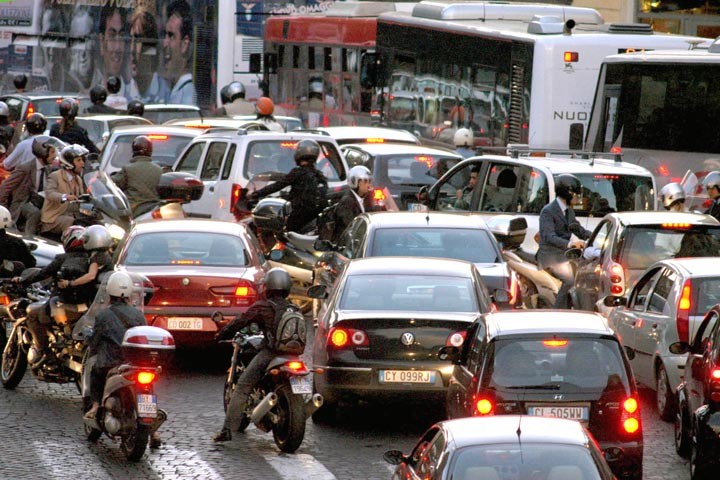
No, let's not go there. Oh, okay.  I am still not accustomed to the daily drive across the border to Italy, where our daughter is in school. Italian drivers have the ability to reduce me to a quivering, swearing, sometimes even tearful, wreck. As someone who shall remain anonymous remarked to me, "They drive as though your life is not worth thirty seconds of their time." Slovene drivers are somewhat better, but do like to honk at you if you are not quick enough for them.


It's another Anglo thing - we are taught to drive defensively, park in the right places etc. Oh no, not here. (I am making judgments here, not observations. Except that the following observations are all true.) Need directions? Stop the car on the road, get out and ask. Don't feel like walking across the car park to the supermarket? Just park outside - bonus points if you do it in the driving lane that everyone else is using to get to the actual parking spaces. Ditto for school. Parking four deep across the road at the bend is far more convenient - for you. It's not your kid stuck in the school bus that can't get round the corner. My husband once broke down and directly asked a friend who drives like this, "But what if you block the road?" He replied, "Then they have to wait."

But I am Slovene enough to longer care about stopping in the one way street right in front of our apartment to let the children out if it is raining. Naughty me.

And one thing I do know: despite stresses, frustrations, and setbacks, I have no regrets about moving here.

Wednesday, 15 May 2019

Quick Lit May 2019

Linking up with Modern Mrs Darcy as usual for a round up of the past month's reading. Two children's classics and then pot luck for me in April!


L.M. Montgomery - Anne of the Island
I am finally really getting into the Anne of Green Gables books - perhaps because I prefer the grown-up Anne. I admit, I went online to figure out if this was the book where Gilbert proposed, because I couldn't stand the suspense! (It was.) I've been enjoying them as audio books, but my library's digital section, alas, does not have the next one in audio.

Ruth Saberton - The Island Legacy
I am trying to work my way though unread Kindle books without buying more, especially those free ones we pick up on a whim. Any reader can guess how I am succeeding. The plot premise - estranged or distant relative receives unusual bequest, usually some old  stately home - is pretty ubiquitous (in this case, it's British expat, island and castle) but Saberton approaches it with a slightly different style, beginning slowly and focusing on evoking the land as a character ("upmarket commercial" is the term used in her author blurbs). Ness's struggle to save the failing estate, to understand why it was left to her, and to uncover the mystery of her mother's long-ago death there kept me turning pages (that plus the three romances thrown in for good measure). However, skip the first chapter if you don't want to know the solution to one of the main plot lines, because Saberton basically gives it away.

Adelina St. Clair - The Path of a Christian Witch
Maybe it is because I am no longer immersed in the Bible belt; maybe it is because I am reaching a certain stage in life *cough, cough*  CRONE *cough, cough*; maybe it is because the nasty divisions in the US and UK have made me turn my back on what divides us in favour of focusing on what unites us; or maybe it is because not having a branch of my church (Anglican) here, I have been re-examining my core beliefs. I suppose all of this, but the result is I have been reading more in comparative religion, especially dissident female voices. I find that they help me hold a discerning mirror to my own faith. This is a spiritual memoir, chronicling how St. Clair forged her own path between Wicca and Christianity (specifically Catholicism). I could not say that I was completely comfortable with everything in this book, but it is certainly food for thought, especially if you are Christian or Wiccan.

Johanna Spyri - Heidi [audiobook]
Reading and listening to Anne of Green Gables for the first time made me nostalgic to revisit some of my childhood favourites. Heidi (if you don't know) is the little Swiss orphan who goes to live with her misanthropic, reclusive grandfather on the mountains, and, of course, brings the old man back to life. Trials come when Heidi is taken to Frankfurt by her aunt to be the companion of wheelchair-bound Clara, but a return to her beloved mountains also heralds hope for her new friend. Heidi is still endearing, though the second half of the book is a little too preachy at times, and reading as an adult, it is rather terrifying how her aunt casually shunts her from carer to carer, all the while patting herself on the back for doing her duty. I also remember loving the sequels, but I have now discovered that they were actually written by one of Spyri's translators.

Aldous Huxley - Brave New World
I had skimmed this before, but it didn't seem quite my book. Anyhow, my daughter is studying it in school, so I borrowed her copy and read it properly. Huxley imagines mass production and consumerism as the gods of his future world. Human beings are scientifically bred to be perfect cogs in the wheel of society, conditioned to consume and numbed to feelings by endless drugs and mindless sex. But when a questioning Alpha meets a "Savage" on a "Reservation", and thinks he can exploit him to his advantage, both their worlds crack open. Honestly, still not my cup of tea (and for the record, I didn't like 1984 that much either), but at least it's a classic ticked off my list. I do, however, think that some of the people who get so hysterical about the current political situation would do well to read both these dystopian classics, if only to get their references correct.

Whether your reading has been witchy, dystopian or classic, I hope it was a good month!


Thursday, 18 April 2019

Babel fish, prosim

Or, musings on a multilingual society.


Ah, how I need one of these. Google translation services just don't quite do it. A case in point: this week I was checking on local events and came across a chocolate and wine tasting afternoon. Sounded great, but then I scrolled down to the schedule and read:
18.00-22.00  Blind tasting of tapeworms and workshops.
Mmm, a little-known slavic Easter tradition, or is Google just a teensy bit confused?

In Slovenia, you pretty much have to function with a little of several languages. According to my in-depth research (ahem, Wikipedia) Slovene is apparently spoken by two and a half million people around the world, and mangled by many others, including myself. Not very shockingly, most of those live in Slovenia - but it is not even the first language of all Slovenians (again Wikipedia puts it at about 2.1 million).*

Slovenia is a small country, and given its many borders and that fact that the Slovene people have been part of many empires across history, native second (or first) languages are common, most notably Italian and German, especially among older residents. I've seen a granddad on the playground chatting happily to his granddaughter in Slovenian, then turn to hail a passing friend in Italian. This, by the way, is apparently declining, and it's pretty obvious that English is taking its place. That might be a relief to tourists, but it's not so helpful for those of us who are struggling to learn Slovenian. It's pretty habitual that I will enter a shop, make my request in halting Slovenian, be answered in English, try to answer back in Slovenian, and be answered again in English, which just encourages me to give up.

Koper itself, where we live, is a dual language city, with Italian as the other language (it is known also by its Italian name, Capodistria). Signs and posters, even information in shop windows, is habitually in both languages. Actually, road signs also pointing to Croatia tend to be in three languages. German is also useful if you shop at Hofer (Aldi) since much of their own-brand items are labelled in German. If I'm trying to read ingredients or cooking instructions, I tend to scan whatever languages on the packet I have a vague knowledge of. This lazy option does not always work - the other night, I somehow managed to burn blancmange.

HR is Croatia: Hrvaška

Anyhow, aside from strange culinary disasters, reawakening the language-learning part of my brain has been interesting. Two of the three languages I learned at school were dead (Latin and classical Greek), so speaking a foreign language is my weak point. Apart from a grounding in French, I have a smattering of Italian that I picked up when we were heavily into touring Italy, and I've been studying Slovenian for a while now, and I find that sometimes, when I look at signs here, I don't actually register which language it is I'm reading. Often, when I try to think something through in Slovene, it ends up in my schoolgirl French. It's like my brain is saying Hey, here's a foreign word, it's all the same. My attempts at Italian tend to peter out into French as well. My head is just a tower of Babel.

But yes, a Babel fish would simplify things. Now, please excuse me while I go get ready for my tapeworm tasting.

*It's part of a much wider family of Slavic languages, but, from our conversations, it appears that how closely they are related seems to depend on how nationalistic you are. We have been told by a Russian that it took about a month for him to learn Slovenian. Anyhow, that controversy would be a whole other blog post.

Nerdy postscript

Apparently the Slovenian physicist who translated The Hitchhiker's Guide to the Galaxy (Štoparski vodnik po Galaksiji) had to come up with many inventive ways to convey Douglas Adams's ideas in Slovenian. Babel fish becomes "riba babilonika", "Babylon fish".  The infamous drink the Pan Galactic Gargle blaster becomes "pangalaktični glorez" or (roughly) "pangalactic throat-cutter". I think that's pretty interesting, and I'm not the only one because I got this information from a Slovenian academic thesis on the subject.
And Google translate told me that title means "Galactic Hockey Guide", by the way.